Three days in Milan is the sweet spot. Two days and you’re sprinting through the Duomo with one eye on the clock; four days and you start padding the schedule with shops you don’t care about. This 3 days in Milan itinerary is built from the trips I actually take when friends fly into Malpensa for a long weekend — the route that hits the obvious icons without making them feel like checkboxes, and leaves room for a proper aperitivo, a slow lunch in Brera, and one honest day trip if you want it. Prices and opening hours below are current for 2026, and yes, you need to book the Last Supper before you book the flight.
Why 3 days is the sweet spot for Milan
Milan gets unfairly written off as “just the business city.” That’s a take from people who spent one rushed afternoon between train connections. The historic core is tighter than Rome’s and more walkable than Florence’s in summer — from the Duomo to Castello Sforzesco is a 12-minute walk, and almost every major sight sits inside the Cerchia dei Bastioni ring. With 72 hours in Milan you can see the Duomo properly (inside, terraces, and the archaeological area underneath), get into the Last Supper without buying a sketchy resale ticket, eat at two or three places worth flying for, and still have a day for either deep-cut Milan or a train out to Bergamo or Como.
If you’re choosing between trip lengths, I’ve written separate guides for a 2-day Milan visit and a 5-day version — but for a first trip, three is the number I’d recommend nine times out of ten. The fourth day is where most itineraries quietly run out of ideas.
Book these before you book anything else
Three reservations make or break your Milan 3-day itinerary. Get these locked down before you worry about hotels.
- The Last Supper (Il Cenacolo) — €15 including the mandatory booking fee. Tickets drop on the official cenacolovinciano.org portal roughly four months out and the prime slots (10:00–13:00) vanish in under an hour. If you miss the official release, a small handful of authorised guided tours hold inventory; I link the legit ones in my Last Supper tickets guide. Skip Viator resellers charging €80.
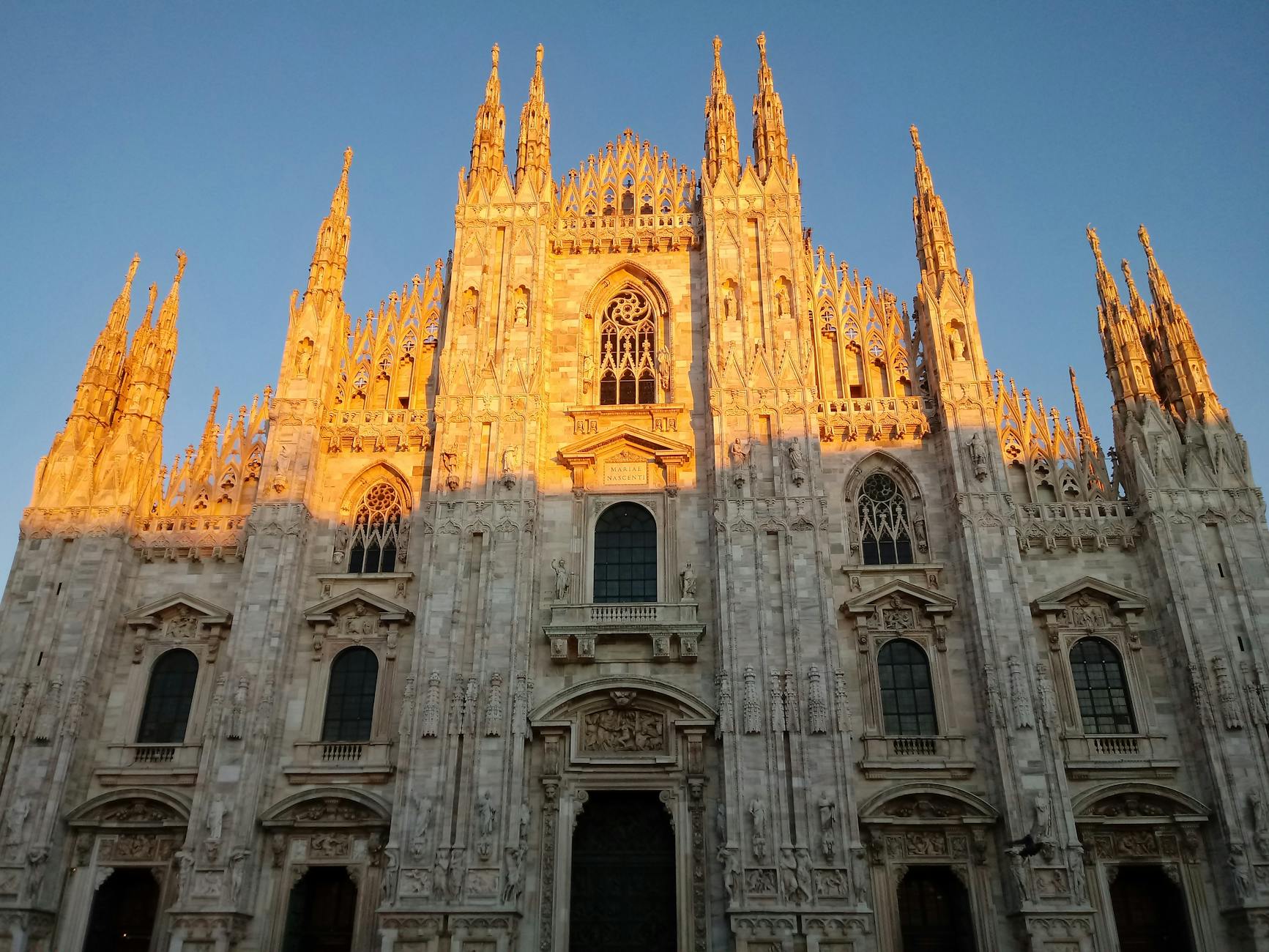
- Duomo + Terraces combo — €25 with elevator access to the roof, €17 if you take the stairs. Buy on duomomilano.it; reserve the first slot of the morning (9:00) for the best light on the marble and the smallest crowds. Full breakdown in the Milan Duomo guide.
- ATM transport pass — €12 buys a 72-hour pass covering every metro, tram, and bus in the urban zone. Don’t bother with single tickets unless you’re only riding three times total.
Optional but worth it: a dinner reservation at Trippa (Porta Romana) at least three weeks ahead, and a Sunday aperitivo slot at Bar Basso if you’re in town a Friday or Saturday.
Day 1 — The historic core: Duomo, Galleria, Brera, aperitivo
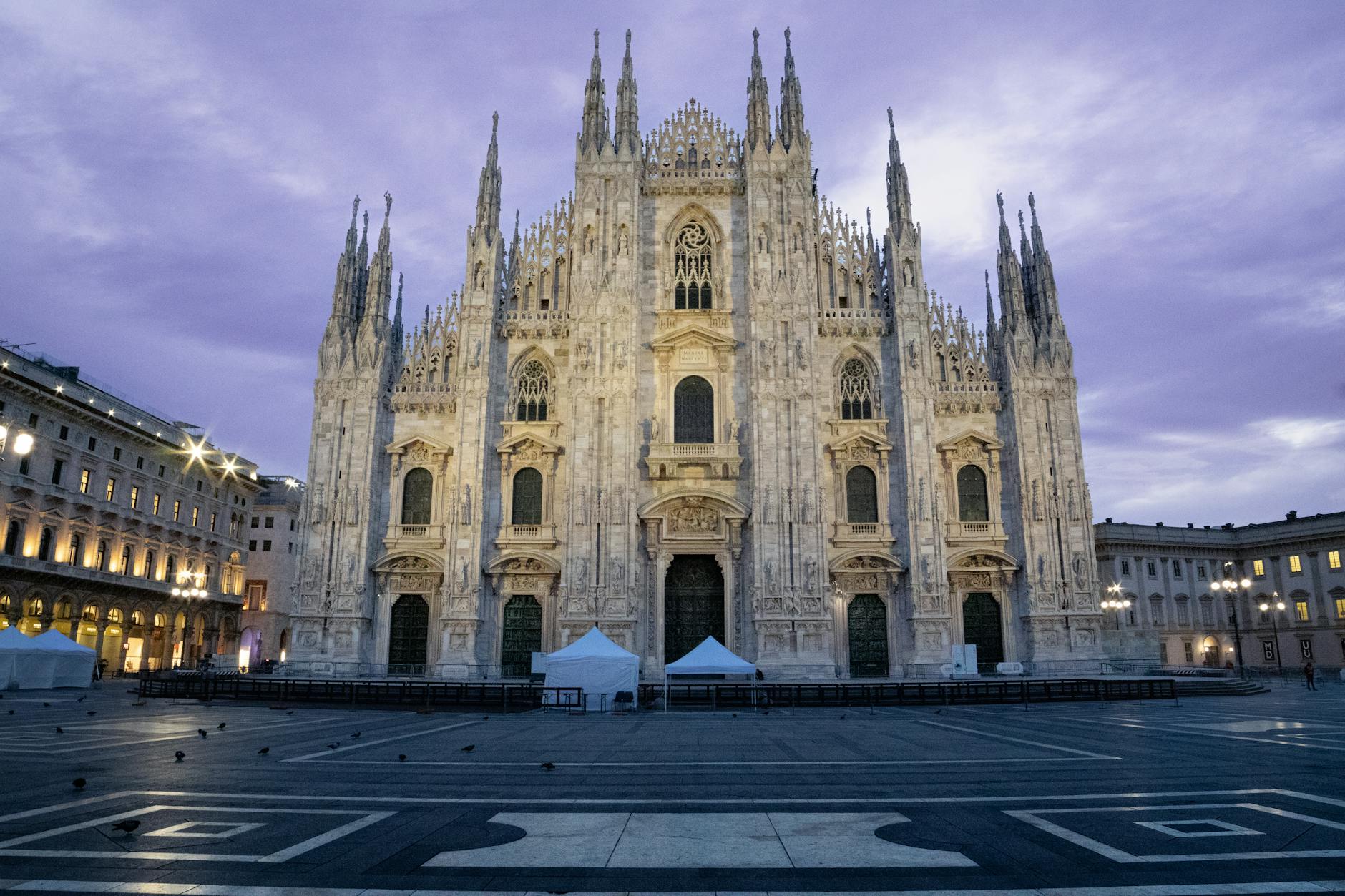
Start at the Duomo at 8:45. The piazza is genuinely quiet before nine, the marble glows pink, and you’ll get into the cathedral on your 9:00 timed slot with nobody at your shoulder. Spend forty minutes inside — the rose window above the apse and the scale of the central nave deserve more than a phone-camera lap.
At 10:00, take the lift to the terraces. Twenty euros and a half-hour later you’re walking on the roof among the spires, with the Alps on a clear day and the Madonnina gilded above you. Come down through the archaeological area beneath the cathedral — most people skip it, which is the reason to go. The fourth-century baptistry where Saint Ambrose baptised Augustine is right there, free with your terrace ticket, and it’s almost always empty.
By 11:30 you’re in Galleria Vittorio Emanuele II. Spin your heel on the bull mosaic if that’s your thing (it’s tradition, and yes, it’s touristy), then walk straight through to Piazza della Scala. The opera house itself is more interesting from the inside if you book a museum visit (€12, 30 minutes), but the facade is enough on a first pass.
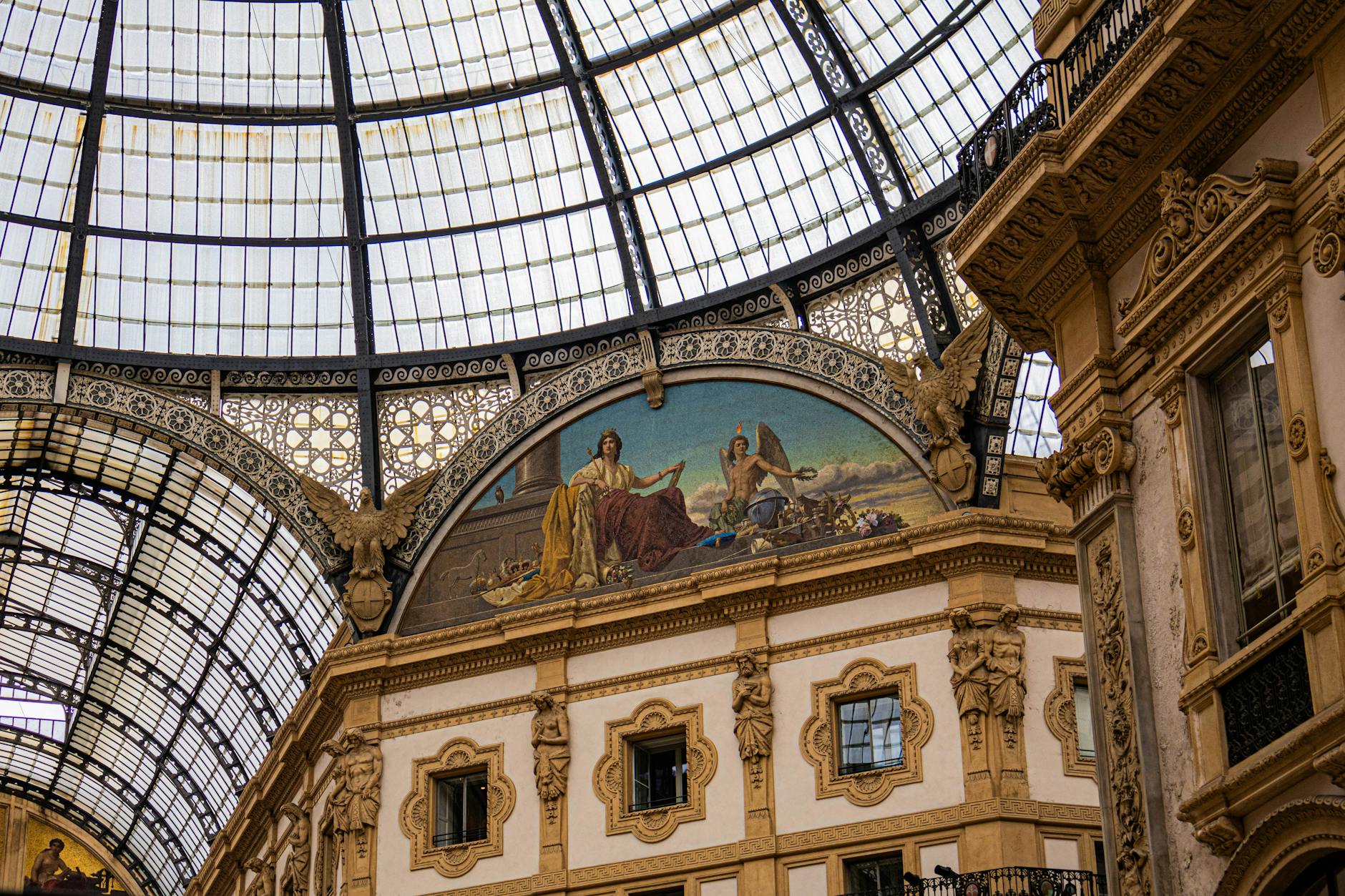
Lunch at Spontini on Via Santa Radegonda if you want the cheap, fat-slice Milanese pizza locals actually eat — €5.50 for a wedge. If you want sit-down, walk fifteen minutes north to Latteria San Marco in Brera for the €38 set lunch (book the day before; they have eight tables). Either way you’re in Brera by 14:00.
Pinacoteca di Brera opens until 19:15 on most days and the late afternoon is the right time to go — €15, three hours is plenty. Don’t try to see every room. Mantegna’s Dead Christ, Raphael’s Marriage of the Virgin, Caravaggio’s Supper at Emmaus, Hayez’s The Kiss. Those four rooms. Then out.
From 18:30, you’re doing aperitivo. This is the meal Milan invented, and Brera is where to do it the first night. N’Ombra de Vin on Via San Marco does a proper version — €12 for a Negroni Sbagliato and full access to a buffet of focaccia, cured meats, marinated vegetables, and small pastas. Two drinks and you’ve eaten dinner. If you want something more refined, Dry Milano two blocks east pairs cocktails with pizza — the gin-and-tonic with juniper foam plus a Margherita Bufala is a thirty-euro evening and one of the best food deals in the city. More options in the Milan aperitivo guide.
Day 2 — Castello, the Last Supper, and either Navigli or Prada
Start at Castello Sforzesco at 9:00. The courtyards are free; the museums inside are €10 combined and worth ninety minutes for Michelangelo’s Rondanini Pietà alone — his final, unfinished sculpture, in a quiet room that’s rarely crowded. Walk out the back of the castle into Parco Sempione and aim for the Arco della Pace across the park. It’s a forty-minute morning loop and shakes off any wine from last night.
You need to be at Santa Maria delle Grazie twenty minutes before your Last Supper slot — they’re strict about it and lock the door at your start time. The viewing is exactly fifteen minutes in a temperature-controlled antechamber, then fifteen in front of the painting itself. People come out either deeply moved or vaguely confused. I think it lands harder if you’ve read about the restoration on the train over — Leonardo painted on dry plaster instead of fresh, which is why the thing started flaking within twenty years of completion.
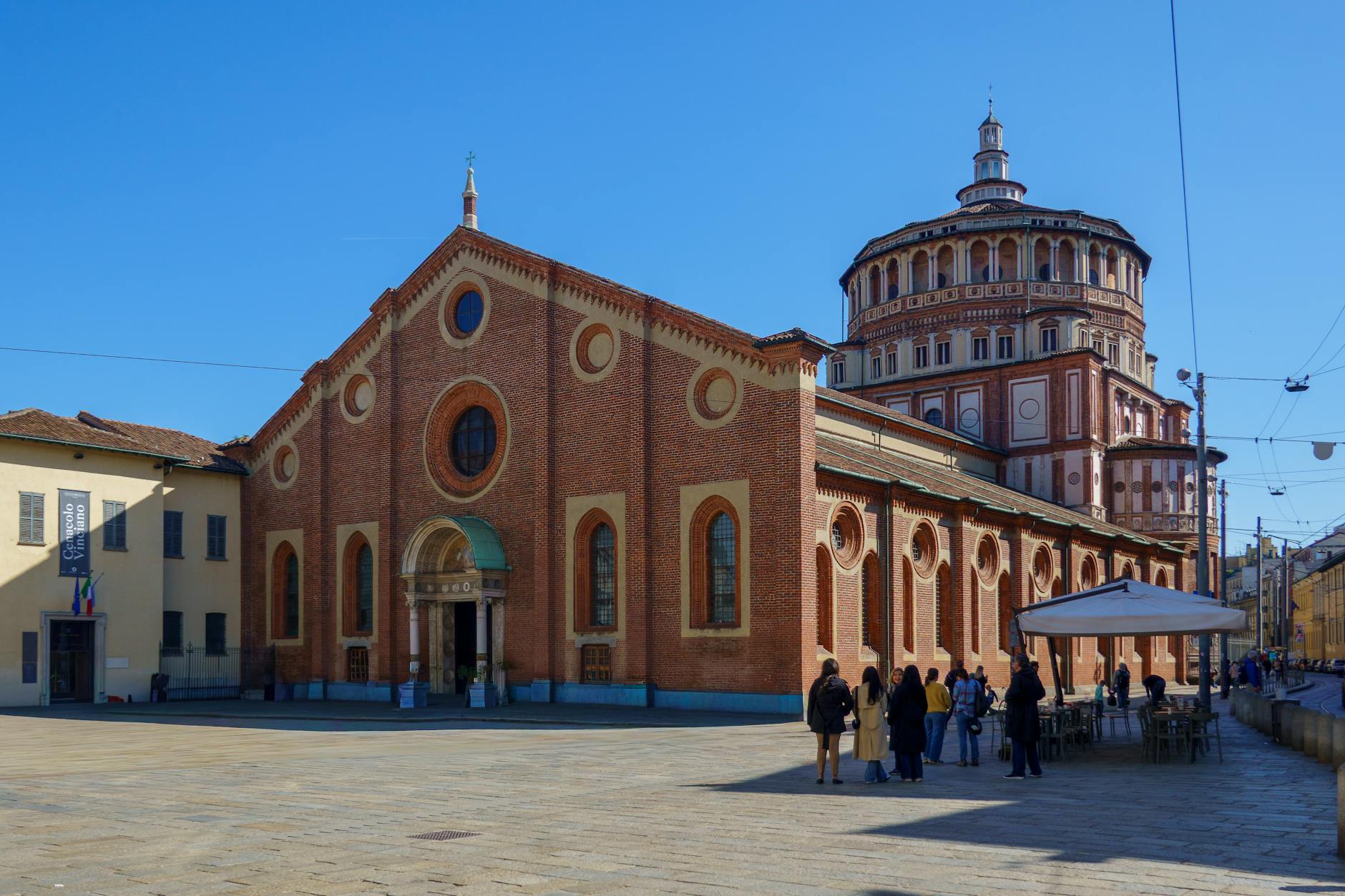
Lunch in the Magenta neighbourhood right around the church. Pavé does the city’s best pastries and decent sandwiches for €8–10; Trattoria Madonnina two streets south does proper cotoletta alla milanese for €22 — the bone-in veal cutlet pounded thin and fried in clarified butter, the dish you came here to try.
The afternoon splits. If you want classic Milan, walk down to Sant’Ambrogio (the basilica, fourth century, the oldest church in the city after the Duomo cathedral, and arguably more atmospheric — free entry), then continue south to Colonne di San Lorenzo and into the Navigli canals for evening aperitivo on the water. If you want contemporary Milan, take the M3 yellow line south to Fondazione Prada — €15, designed by Rem Koolhaas, with a gold-leaf-clad tower (the Torre) you can climb for free with the ticket. Wes Anderson designed the in-house bar. It’s a different city from anything you’ve seen so far.
Navigli for dinner either way. El Brellin on the Naviglio Grande for a proper sit-down (book ahead, €45 a head); or Mag Cafè a few doors down for cocktails and a lighter plate. The canals run from medieval engineering — Leonardo had a hand in the lock systems — and on a summer evening they’re the most alive part of Milan.
Day 3 — Deep Milan or out of town
Here’s the trade-off, and I’ll give it to you straight. If it’s your first time in Italy, take the day trip. If you’ve been to Florence and Venice already and Milan is the main event, stay in the city and go deeper. Both are good choices.
Option A — Day trip to Bergamo (or Como)
Bergamo is the day trip from Milan I keep going back to. Most travellers spend three days in Milan and treat day trips as an afterthought. They miss the better option an hour east — walled, medieval Bergamo Alta, which feels like the version of Italy you came to see, minus the cruise crowds of Cinque Terre. Trenitalia runs Milano Centrale to Bergamo in about 50 minutes for €5.50 on the regional service. I usually catch the 8:33.
From Bergamo station, take Bus 1 (€2.30) to the funicular, ride up to the upper city, and you’re in a Venetian-walled hill town for the rest of the day. Piazza Vecchia, the Cappella Colleoni, polenta taragna for lunch at Da Mimmo, gelato at La Marianna (the place that supposedly invented stracciatella in 1961). Train back at 18:14 and you’re showered and out for aperitivo by 20:00.
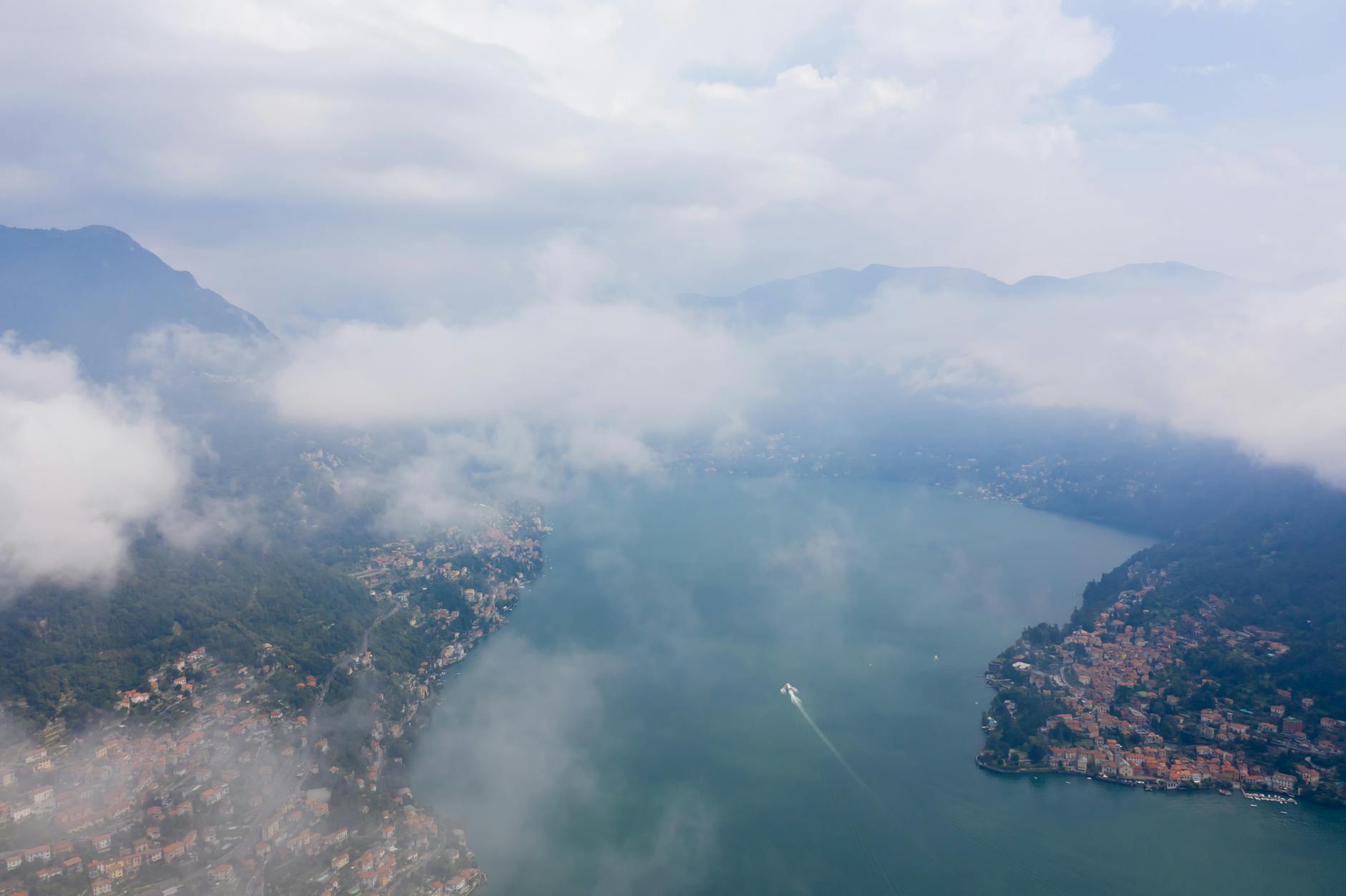
Lake Como is the more famous choice and slightly more effort — 40 minutes to Varenna by direct train, then ferries between Varenna, Bellagio, and Menaggio. Beautiful, busier, and you’ll burn an extra hour in transit. Full breakdown in the Milan and Lake Como itinerary. Other choices in the day trips from Milan guide.
Option B — Stay in the city
If you stay, here’s the route. Morning at Cimitero Monumentale — yes, a cemetery, and one of the most extraordinary open-air sculpture museums in Europe. Free, opens at 8:00, ninety minutes is enough. Walk south through Isola, the once-working-class neighbourhood now full of independent coffee bars and design shops. Bosco Verticale (the vertical forest towers) and Piazza Gae Aulenti are a fifteen-minute stroll east — the most architecturally dramatic public square built in Europe this century.
Lunch at Ratanà (Cesare Berlinghieri, one Michelin star, lunch menu around €40), then either an afternoon at the Museo Nazionale Scienza e Tecnologia (Leonardo’s machine models, plus a real submarine indoors), or a tram out to San Siro for the stadium tour (€30, fine if you’re a football person, skippable if not). Closing the night with rooftop drinks at Terrazza Aperol overlooking the Duomo, then dinner at Trippa in Porta Romana if you booked. More ideas in things to do in Milan.
Five places to eat across three days
Five spots I’d send anyone to without a second thought. Reserve where indicated.
- Trippa (Porta Romana) — neo-trattoria, reserve three weeks out. Vitello tonnato, fried rabbit, sweetbreads. €55–65 a head with wine. The most consistent meal in Milan.
- Latteria San Marco (Brera) — 1930s milk bar turned eight-table lunch counter. Cash only. The riso al salto (crisped saffron rice) is the order. €30–40.
- Da Giacomo (Porta Venezia) — old-school fish, Milanese gentry crowd, white tablecloths. The spaghetti alle vongole is the city benchmark. €70 plus.
- Luini (off Piazza Duomo) — panzerotti fried pockets of dough with mozzarella and tomato. €3.50 each, takeaway only, queue moves fast. A century old.
- Pasticceria Marchesi (Via Montenapoleone) — Prada-owned pastry counter for the morning brioche e cappuccino ritual. €8 standing, €18 seated. Worth it once.
Full restaurant list and what to skip in the Milan food guide.
Where to stay for a 3-day Milan trip
Stay central. With only three days you don’t want a thirty-minute metro ride bookending each day. The best neighbourhoods for a first visit:
- Duomo / Centro Storico — most convenient, slightly sterile in the evenings once the offices empty.
- Brera — my pick. Walkable to everything, atmospheric streets, great morning coffee bars.
- Porta Venezia / Porta Nuova — more local feel, excellent restaurants, ten minutes by tram to the centre.
- Navigli — fun, loud at night, slightly further out.
Three hotels I’d actually book:
- Budget (under €150): Babila Hostel & Bistrot — design hostel near Porta Venezia, private doubles from €110, rooftop bar.
- Mid-range (€200–350): Hotel Spadari al Duomo — eleven rooms behind the cathedral, art-collector aesthetic, the best mid-range location in the city.
- Splurge (€500+): Bulgari Hotel Milano — between Brera and the fashion district, garden suite, hammam spa. The understated splurge.
Full neighbourhood-by-neighbourhood breakdown in where to stay in Milan.
Getting around — metro, trams, walking, taxis
Buy the €12 ATM 72-hour pass at any metro station. It works on the M1 (red), M2 (green), M3 (yellow), M4 (blue), M5 (lilac) metro lines, every tram, every urban bus, and the suburban trains within the city. Tap your card at gates and tram readers — Milan moved fully contactless in 2024 and the system is faster than buying paper tickets.
Walking covers most of Day 1 and a good chunk of Day 2 — the historic core is 2 km across. The vintage orange trams (line 1, line 9) are worth a ride for their own sake. Taxis are reliable, metered, and roughly €12–18 across the centre; use the FreeNow app rather than flagging down. Uber operates only as Uber Black at twice the price. Skip rental cars — you can’t drive in the centre anyway thanks to the Area C congestion zone.
Practical tips and what I’d skip
Skip-worthy:
- The Galleria’s expensive cafés. Camparino is famous; it’s also €18 for an Aperol Spritz. Walk three minutes to Via Montenapoleone and pay €9.
- Quadrilatero della Moda window-shopping if you’re not actually buying. Half a block is fine. An hour is a slog.
- The San Siro stadium tour if you don’t care about football. It’s twenty minutes from the centre and feels like a Premier League gift shop visit.
- Buying Last Supper tickets from any site that’s not cenacolovinciano.org or the named authorised tour partners. Resale prices triple in season.
Worth knowing:
- Lunch breaks are real. Many small shops and some museums close 12:30–15:00.
- Many restaurants don’t serve dinner before 19:30. Aperitivo bridges the gap.
- August is dead. Half the family-run places close for two to three weeks around Ferragosto (15 August).
- Tipping isn’t expected — round up or leave the loose euros. The coperto (€2–4 cover charge) is on the bill.
- Tap water is fine. Ask for acqua del rubinetto if you don’t want to pay €4 a bottle.
Best time of year for a Milan three-day itinerary
Late April to mid-June is the best window — long daylight, Parco Sempione in bloom, evenings warm enough for outdoor aperitivo without August’s airless heat. September and October are nearly as good, with the bonus of Fashion Week energy (mid-late September) if that interests you and the warning that hotel rates double during it if it doesn’t.
July and August are humid, hazy, and emptier of locals — half the city decamps to the Riviera. December is great for the Festa di Sant’Ambrogio (7 December) and the lit-up Galleria but expect 4°C and grey. January and February are cheap, quiet, and the museums are blissful. See the winter and summer itinerary guides for season-specific tweaks. For a broader survey of options, the master itineraries guide compares trip lengths side by side.
Frequently asked questions
Is 3 days enough for Milan?
Yes — three days in Milan is plenty for a first visit. You can see the Duomo, the Last Supper, Castello Sforzesco, Brera, the Navigli, and either Fondazione Prada or a day trip to Bergamo or Como without rushing. Most travellers actually find Milan smaller and more compact than they expected. Two days is tight; four days requires actively planning slower pace or extra day trips.
How much does a 3-day Milan trip cost in 2026?
Budget around €120 a day per person if you’re staying in a mid-range hotel, eating well, and seeing the main paid attractions — so roughly €360 for the three days excluding flights. Hostel travellers can do it on €70 a day; luxury travellers will spend €400+ a day before they’ve ordered the second glass of wine.
Do I need to book the Last Supper in advance?
Yes, and well in advance. Official tickets go live at cenacolovinciano.org roughly four months before the visit date and sell out the same day for popular slots. If they’re gone, a small number of authorised tour operators (Walks of Italy, Take Walks, City Wonders) hold guaranteed inventory at higher prices — €60–90 instead of €15.
Is Milan walkable?
The historic core is very walkable — 2 km across, mostly flat. You’ll walk between most Day 1 sights, take a few tram rides on Day 2, and rely on the metro to reach Fondazione Prada or the Cimitero Monumentale. Comfortable shoes matter; cobblestones in Brera and Navigli are uneven.
What’s the best day trip from Milan for 3-day travellers?
Bergamo if you want the lowest-effort, highest-payoff option — 50 minutes by train, walled medieval upper city, fewer crowds than Como. Lake Como if you want the famous lakeside views and don’t mind extra travel time. Skip Verona and Cinque Terre on a 3-day trip; they’re too far for a comfortable round trip.
Can I do this itinerary with kids?
Mostly yes. The Duomo terraces, Castello Sforzesco courtyards, Parco Sempione, and the Museo della Scienza (full of Leonardo machines and a real submarine) are kid-friendly. The Last Supper requires sitting through a 15-minute viewing in silence, which works for older children. Pacing matters more than venue — cut one museum if you’re travelling with under-tens.
What if I only have a layover and not a full 3 days?
Milan is one of the easier European cities for a productive layover — 50 minutes from Malpensa to Centrale on the express train, and the Duomo is two metro stops from there. The Milan layover guide walks through 6-hour and 10-hour versions. For a longer trip in the other direction, the one-week Milan itinerary uses Milan as a base for the lakes and beyond.
Final thoughts
Three days in Milan is enough time to stop arguing with the city. Most first-time visitors arrive expecting Florence and get annoyed when they find a working financial capital with traffic and 1960s office blocks next to the Gothic cathedral. Milan doesn’t apologise for that. It rewards visitors who lean into what the city actually is — the design, the food culture invented around the working day (aperitivo, risotto giallo, the seven-minute espresso break), the Renaissance art tucked behind office facades, the working canals that fed the construction of the Duomo. Three days is the right amount to figure that out. Book the Last Supper, pack one pair of good shoes, and don’t waste a meal.