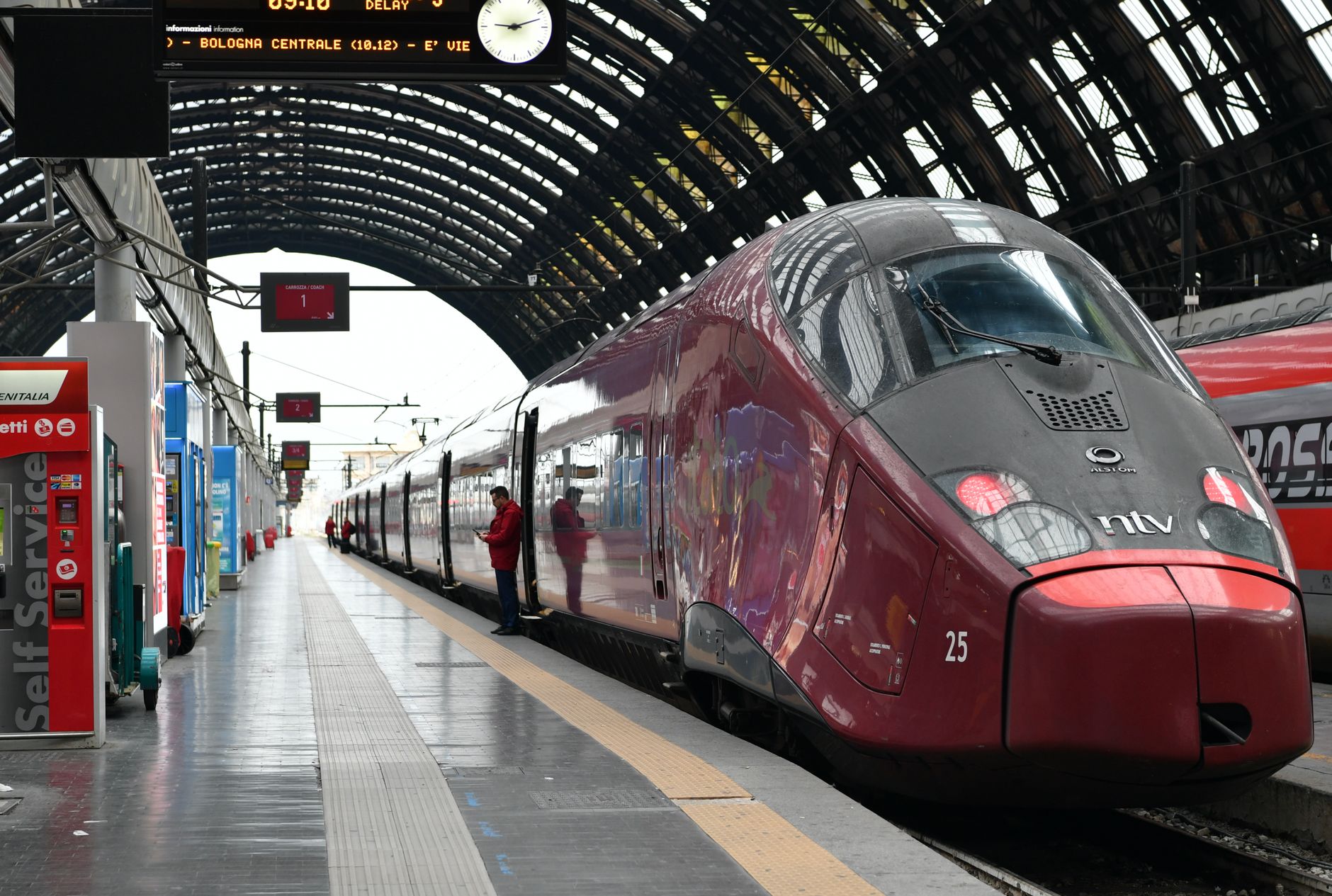
The first time I rode one of Milan’s orange 1928 trams down Via Carducci, I forgot where I was going. The wooden interior, the polished brass fittings, the rattle of steel wheels on cobble-bedded rail — it felt like a moving museum that happened to also be public transport. That tram was a Carrelli, built ninety-eight years ago, still in daily service on Line 1. This guide covers Milan tram routes that actually matter for visitors: which lines are useful for sightseeing, where to ride the historic carriages, how tickets work, and whether the ATMosfera dinner tram is worth €75. I have ridden every line mentioned here at least twice in the past two years, and I will tell you which ones I keep coming back to.
Milan’s tram network is the largest in Italy and one of the oldest continuously operating systems in the world. ATM (Azienda Trasporti Milanesi) runs 17 tram lines that wind through the historic center, out to the ring road suburbs, and along routes that the metro simply does not cover. The trams are slower than the M1 or M3, but they show you the city at street level — palazzi, plane trees, the back doors of bakeries — in a way no underground line ever could.
Why Milan’s trams are more interesting than the metro
The metro is faster. The metro is the right answer when you need to cross town in fifteen minutes. But the metro is also a tube in the dark, and Milan above ground is a city of trees and tile and balconied facades that deserve to be looked at. The tram is how locals actually move through the central neighborhoods — Brera, Porta Genova, Navigli, Porta Romana — because the lines run exactly where the metro doesn’t bother to go.
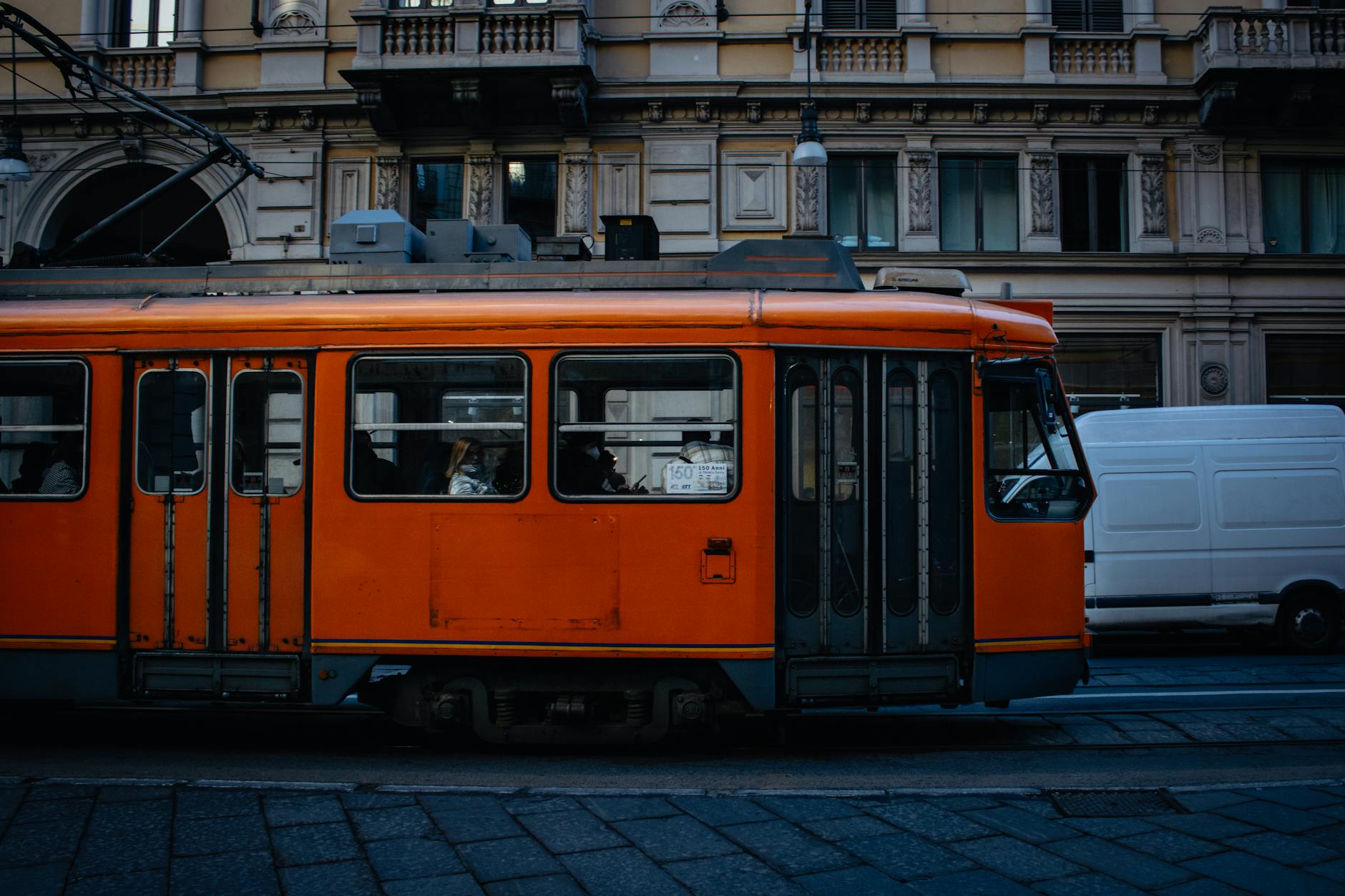
The other reason is the rolling stock. Milan still operates roughly 125 Carrelli trams from the 1928-1932 production run, and they are not retired museum pieces wheeled out for festivals. They run on Lines 1 and 5 most days, mixed in with modern Sirio low-floors. You pay the same €2.20 to ride a tram that has been carrying Milanese commuters since Mussolini was prime minister. San Francisco famously bought a handful in the 1980s and put them on the F-Market line, but the originals — the ones with the inverted glass lamps and the wooden bench seats — still run here, every weekday.
The third reason is rhythm. Trams stop more frequently than buses, run more reliably than they did a decade ago, and they connect places that feel emotionally connected — the Duomo to the canals, Brera to Lambrate. If you are spending more than two days in Milan, learn the tram map. It will change how you move.
How the network works
ATM operates the entire integrated network: metro, tram, bus, and trolleybus. A single ticket works across all four, which means you can ride a tram from Porta Genova, transfer to the M2 metro at Sant’Agostino, then catch a bus at Centrale, all on one €2.20 biglietto urbano valid for 90 minutes. For visitors, this matters because you almost never need to think about which mode you’re using. You buy a ticket; you tap or validate; you travel.
The 17 tram lines are numbered 1, 2, 3, 4, 5, 7, 9, 10, 12, 14, 15, 16, 19, 24, 27, 31, and 33. Numbers are not sequential because routes have been renumbered, merged, and split over the past century — Line 6, Line 8, and Line 11 don’t currently exist. Don’t waste time trying to find a pattern. Use the ATM Milano app or Google Maps for routing; both pull live ATM data.
Tram service generally runs from about 4:30 AM to 1:30 AM, slightly later than the metro, which shuts down around 12:30 AM. After the trams stop, ATM runs night buses (NM lines that shadow the metro routes), but they are infrequent. For most evenings out, the tram is your last reliable ride home. If you need to know how all the pieces fit together, my Milan transport guide covers the whole system end to end, and the Milan metro guide handles the M1-M5 lines in detail.
The historic 1928 Carrelli trams
These are the reason you are probably reading this guide. The Carrelli (literally “trolleys,” referring to the bogie design) were built between 1928 and 1932 by Officine Meccaniche della Stanga and Carminati & Toselli. ATM ordered 500 of them. Ninety-eight years later, around 125 are still in service. That is not a typo.
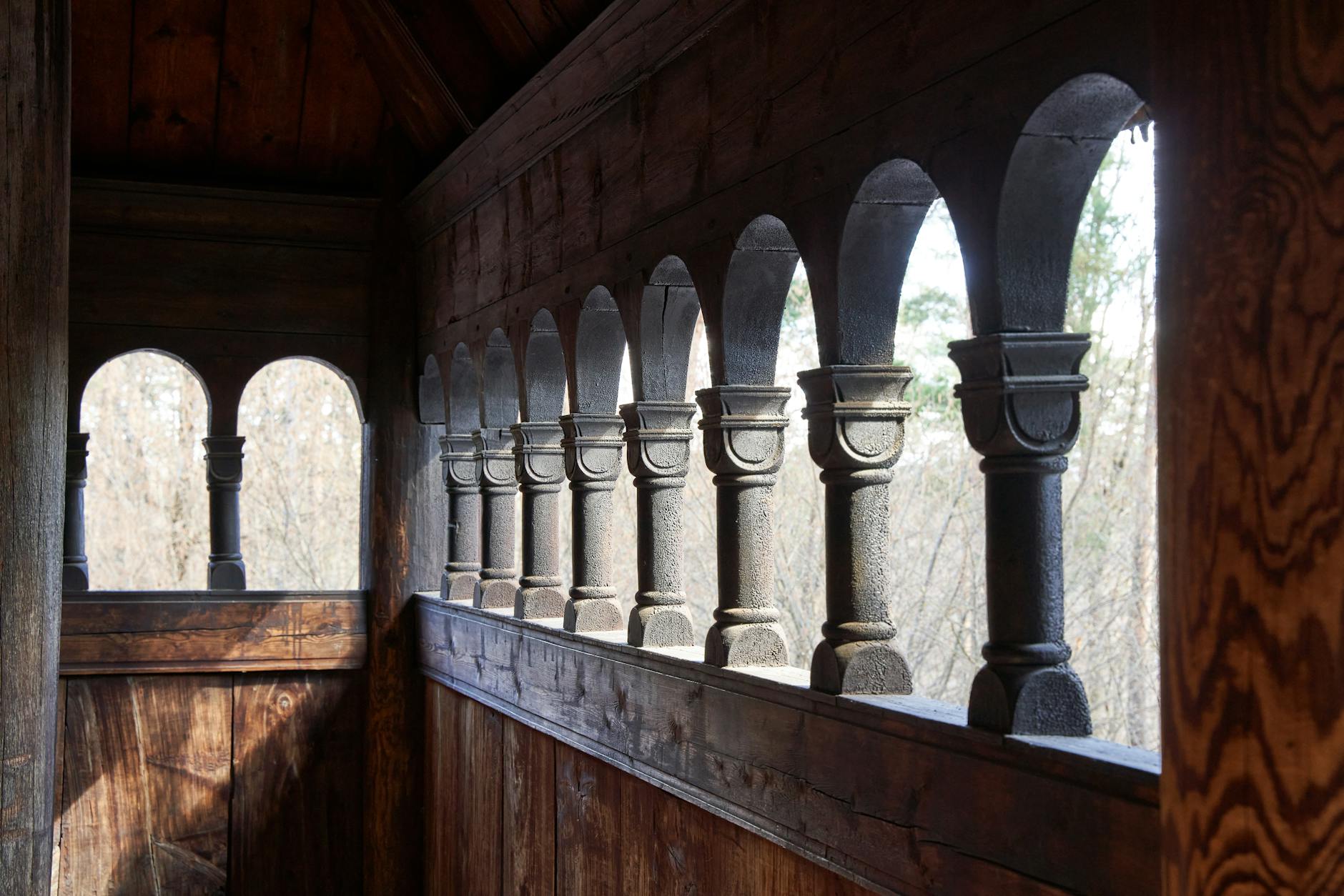
What makes them special isn’t just the age. It’s that ATM never gutted them. The wooden slat seats are original. The inverted opaque glass ceiling lamps are original. The brass window latches, the leather hand straps, the wood-paneled driver’s compartment — all original, maintained continuously by ATM’s heritage workshop. Stepping aboard one feels less like time travel and more like discovering that time never actually moved in this particular tram.
To ride one, your best bets are Line 1 (Greco-Pirelli to Roserio, via Duomo) and Line 5 (Ortica to Cimitero Maggiore). Both lines mix Carrelli with modern Sirio low-floor trams. You cannot reserve a Carrelli; you wait at the stop and hope. In my experience, roughly one in three trams on Line 1 during midday is a Carrelli. Mornings and late evenings skew newer because the older trams get rotated out of peak runs for maintenance.
Photo tip: the wooden interior photographs beautifully on overcast days because the diffused light reduces the contrast between the dark wood and the bright windows. Bright sunny days create harsh shadows that hide the detail. Shoot from the back-facing bench at the rear of the carriage — you get the full length of the wooden ceiling with the inverted lamps in frame. There’s more on lighting and locations in my Milan photography spots guide.
Best Milan tram routes for sightseeing
Not every line is worth riding for its own sake. These four are.
Line 1 — Greco to Roserio (via Duomo)
The crown jewel. Line 1 runs Carrelli trams more reliably than any other route, and its central segment — from Cadorna through Piazza Castello, past the Duomo, down to Porta Venezia — is essentially a sightseeing tour at urban transit prices. I tell every first-time visitor to ride Line 1 at least once from Cadorna to Porta Venezia (about 18 minutes) just to see the city scroll past from a window seat. Best time: late morning, around 11 AM, when light is good and the trams aren’t packed. You’ll pass within 50 meters of the Duomo and the Sforza Castle.
Line 9 — the perimeter loop
Line 9 isn’t technically a full circle anymore — the official route now runs Porta Genova to Centrale — but it traces the line of the old Spanish walls (the Bastioni) around the historic core. Twenty-seven stops, about 44 minutes end to end. Ride it for the urban geography lesson: you’ll see how Milan’s medieval gates (Porta Venezia, Porta Romana, Porta Genova) anchor the modern street grid. Good connection to Navigli at the Porta Genova end.
Line 16 — Monte Velino to San Siro
If you’re going to a match at San Siro stadium, Line 16 is the answer. It runs from the southeast (Monte Velino) up through the city center past the Duomo and out to the stadium. On match days it gets brutally crowded in the two hours before kickoff — go early or take a taxi if you can. On non-match days it’s a pleasant 35-minute ride through neighborhoods most tourists never see.
Line 27 — Ungheria to Viale Ungheria via Lambrate
Less famous but useful if you’re heading to Lambrate (a working-class neighborhood with a strong design-week scene and good cheap restaurants). Line 27 cuts through the eastern side of the city and gives you a sense of residential Milan that most visitors never see. Not a sightseeing line per se, but it’s the kind of route locals use, which is its own kind of authenticity.
Tickets and how to pay
A standard urban ticket (biglietto urbano) costs €2.20 and is valid for 90 minutes from validation across all ATM trams, buses, and metro lines. That 90-minute window includes transfers, so a single ticket gets you most places. A few options:
- Single ticket (€2.20): Buy at metro station machines, tobacco shops (tabaccherie), newsstands, or via the ATM Milano app. Validate by tapping it on the yellow reader inside the tram.
- Day pass (€7.60): Unlimited rides for 24 hours from first validation. Worth it if you’ll take more than three rides in a day.
- Carnet of 10 (€19.50): Ten single rides at a small discount. Useful for longer stays.
- Contactless card or phone: Just tap your contactless credit card or phone on the reader when you board. The system charges you €2.20 and automatically caps at €7.60 per day. This is what I use, and it’s the cleanest option for visitors.
The contactless tap-to-ride system is the single best thing that has happened to Milan public transport in years. No tickets, no apps, no queues. Just tap your card on the yellow reader as you board (and tap again when you transfer — the system tracks your journey for the 90-minute window).
Ticket inspections happen. They aren’t constant, but I’ve been checked four times in the past two years. The fine for riding without a valid ticket is €100, reduced to €37 if you pay on the spot. Don’t try to ride for free; the inspectors are pleasant but not negotiable.
ATMosfera: dinner on a 1928 tram
This is the experience that turns Milan trams into a destination rather than a way to reach one. ATMosfera is ATM’s restaurant tram — a 1928 Carrelli converted into a moving dining room with white tablecloths, proper crockery, and a galley kitchen at the back. It runs two trams nightly, all year, on a 2.5-hour loop through the historic center.
The cost is €75 per person (some menus and add-ons push it higher). That includes a four-course meal, a bottle of wine for every two diners, water, coffee, and the ride itself. You choose between meat, fish, and vegetarian menus when you book. Service starts at 20:00 for ATMosfera 1 and 20:30 for ATMosfera 2.
Booking is mandatory and online-only via the official ATMosfera site. You must book no fewer than 15 days and no more than 75 days in advance, with full payment upfront. Weekends sell out 6-8 weeks ahead, especially in spring and around the holidays. Weeknights are easier — I’ve booked a Tuesday a week out — but the official 15-day floor still applies.
Honest assessment: the food is fine, not extraordinary. The wine is decent. The experience is what you’re paying for — eating a four-course dinner in a wood-paneled 1928 carriage while Milan slides past the windows at 20 km/h. For €75 it’s a fair trade. For a special occasion (anniversary, birthday, last night of a trip) it’s hard to beat. Don’t go expecting a Michelin meal; go expecting an unrepeatable night.
Tram vs metro vs bus
A quick decision framework, since you’ll be making this choice constantly:
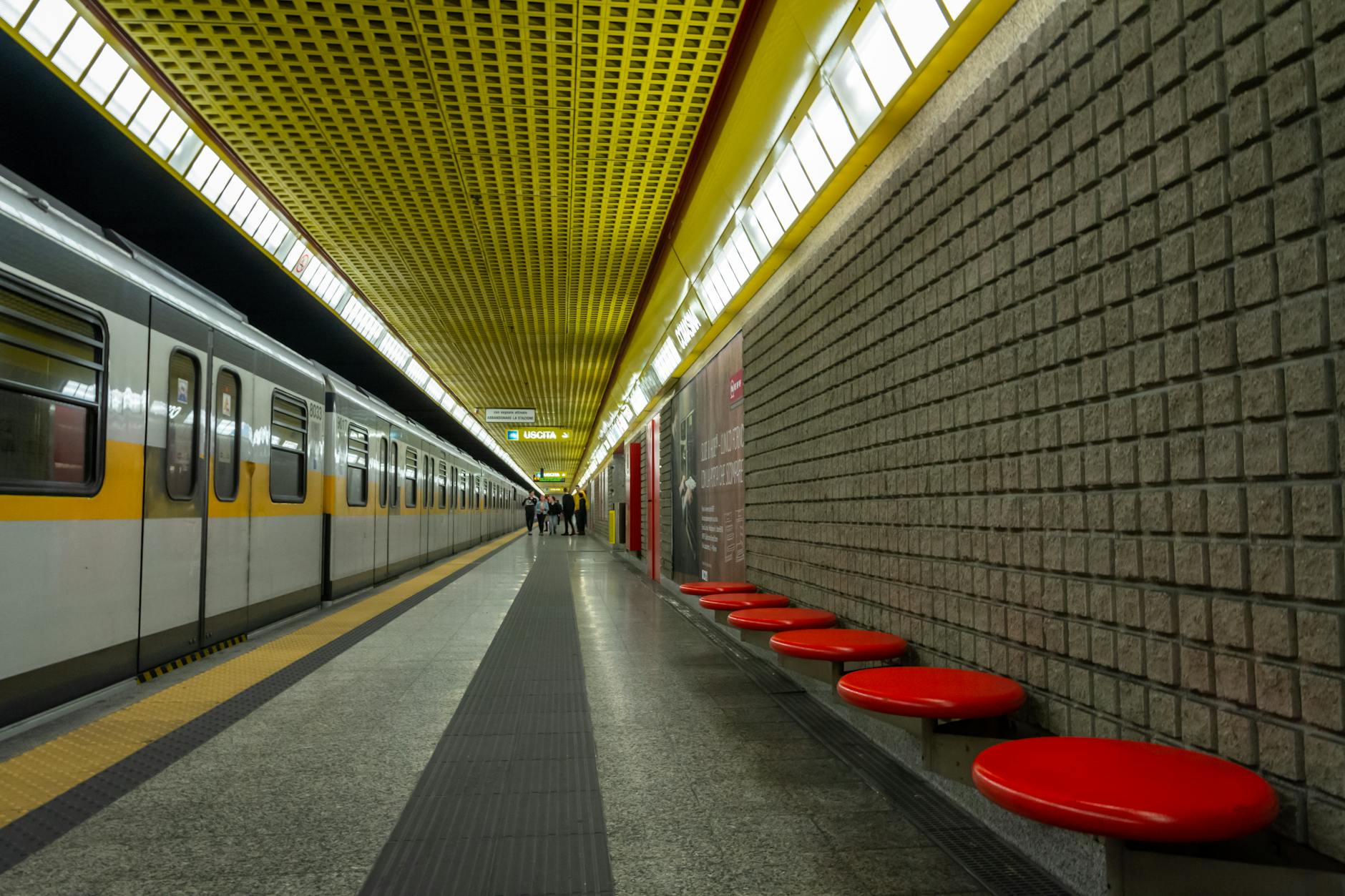
- Take the metro when you’re crossing the city and need to be somewhere fast. M1 (red) and M3 (yellow) cover the central tourist axes; M2 (green) connects Centrale to the canals; M4 (blue) handles Linate airport.
- Take a tram when you’re moving within the central ring (inside the Bastioni), when you want to see the city above ground, or when the metro doesn’t go where you need (Navigli, large parts of Brera, parts of Porta Romana).
- Take a bus when neither tram nor metro covers your route. Buses fill the gaps but they’re slower than trams in traffic.
For airport runs, none of the above — see my Milan airport transfers guide for Malpensa, Linate, and Bergamo. The tram does not go to any airport. For taxi backups and ride-shares, my Milan taxis and ride-sharing guide covers Free Now, Uber Black, and the standard white taxi system.
Practical tips
Boarding etiquette: Let people off before you board. Italians are casual about a lot of things but tram boarding is not one of them — cutting the queue gets you a stare. Move to the back of the carriage if it’s crowded.
Validation: If you bought a paper ticket, you must validate it by tapping it on the yellow reader as you board. An unvalidated ticket counts as no ticket for inspection purposes. Contactless taps automatically validate.
Doors: On older Carrelli trams, doors are manually opened by passengers — there’s a lever or button near the door. On modern Sirio trams, doors open automatically at each stop.
Accessibility: The historic Carrelli trams are not wheelchair-accessible — high floors, narrow doors, steps. Modern low-floor Sirio trams (most common on Lines 4, 7, 9, 14, 15, and 31) have ramps and dedicated wheelchair spaces. If you need accessible transport, check which line you’re using before you go.
Peak hours: 7:30-9:30 AM and 17:30-19:30 PM. Trams get packed, especially Lines 1, 9, and 14. Off-peak is more comfortable and the Carrelli photograph better with fewer bodies in the frame.
Night service: Trams stop running around 1:30 AM. After that, NM night buses run roughly the metro routes, but they’re infrequent (every 30 minutes) and don’t cover every tram line. Plan accordingly — or take a taxi.
Cycling alternative: If you’d rather move yourself, my biking in Milan guide covers BikeMi, the public bike-share, which is genuinely useful in the flat city center.
Photography tips
The best places to catch the Carrelli trams in good light:
- Piazza Castello: Trams loop around the front of the Sforza Castle. Late afternoon (around 17:00 in summer, 15:30 in winter) puts warm side-light on the orange paint. Shoot from the south side of the piazza looking north toward the castle.
- Via Carducci: A narrower street with classic Milanese facades on both sides. Trams pass at street level with relatively little traffic. Best light is mid-morning when the sun is high enough to clear the buildings.
- Porta Genova FS: The tram terminus next to the train station has multiple trams parked simultaneously, including older models. Easy to photograph stationary trams without worrying about timing.
- Piazza Cordusio: Lines 1, 2, 14, and 27 converge here. Good for catching multiple trams in a single frame, especially during the morning rush.
- Largo Cairoli: The intersection where Line 1 meets the Castello area. Lots of tram movement, lots of foot traffic, plenty of compositional options.
If you’re photographing the historic interiors, the back-facing bench seat at either end of the carriage gives you the cleanest sightline down the wood-paneled length. Avoid using flash — it kills the warm tone of the original lamps and makes the wood look orange-plastic.
FAQ
Do Milan trams run at night?
Tram service runs from about 4:30 AM to 1:30 AM. After that, ATM operates NM night buses that shadow the metro routes — but these are infrequent (every 30 minutes) and don’t cover every tram corridor. Most evenings out, the last tram is your last reliable ride home before taxi territory.
How much is a tram ticket in Milan?
A single urban ticket costs €2.20 and is valid for 90 minutes across all ATM trams, buses, and metro lines. A 24-hour day pass is €7.60. A 10-ride carnet is €19.50. Contactless tap-to-pay charges you €2.20 per ride and caps at €7.60 per day automatically.
Are Milan trams free for kids?
Children under 14 ride free when accompanied by a paying adult. Each adult can bring up to two children for free. Beyond age 14, standard adult fares apply. There’s no separate child fare structure.
Can I use contactless on Milan trams?
Yes. Tap any contactless Visa, Mastercard, or Amex (or a phone with Apple Pay or Google Pay) on the yellow reader when you board. The system charges you €2.20 per ride and applies a daily cap of €7.60. Tap again on transfers within 90 minutes — the system recognizes the journey as continuous.
Where do I catch the historic 1928 tram?
Lines 1 and 5 run the highest concentration of Carrelli trams. On Line 1, the central stops at Cordusio, Cadorna, and Largo Cairoli see frequent Carrelli service throughout the day. You can’t reserve one — you wait at the stop and the next tram is either a 1928 model or a modern Sirio. In my experience, roughly one in three Line 1 trams during midday is a Carrelli.
How do I book the ATMosfera dinner tram?
Booking is online-only through the official ATMosfera site (atmosfera.atm.it). You must book between 15 and 75 days in advance with full prepayment. Choose meat, fish, or vegetarian when you book. Weekends sell out 6-8 weeks ahead; weeknights are easier. Service starts at 20:00 or 20:30 depending on which of the two trams you book.
Final thoughts
If you only have two days in Milan, the metro will move you faster between the Duomo and the Last Supper. But if you have three or more, learn the Milan tram routes. Ride Line 1 from Cadorna to Porta Venezia on a Carrelli. Loop Line 9 around the old Spanish walls. Book ATMosfera for your anniversary night, or skip it and just ride Line 5 to Cimitero Maggiore for the price of a coffee. Milan has spent ninety-eight years keeping these trams running, and they are now the most distinctive piece of street furniture in the city. They are also the cheapest sightseeing tour in Europe at €2.20 a ride.
For onward travel — out to Lake Como, the broader Italian rail network, or even renting a car for a Lombardy road trip — Milan’s tram network drops you at every major train station and most of the rental garages. Start with the trams. The rest of the city opens up from there. While you’re at it, my Milan neighborhoods guide and things to do in Milan page will help you figure out which tram stop you actually want to get off at.