Milan has a reputation as Italy’s expensive city — the one where a coffee at the wrong bar costs €8 and a hotel near the Duomo runs €400. That reputation is half true. Fashion weeks, the Salone del Mobile, and now the 2026 Winter Olympics genuinely break the market. The other 40 weeks of the year, finding cheap accommodation Milan is more straightforward than most travelers think. I have stayed in this city probably forty times across a decade, mostly on a budget that would not cover one night at the Park Hyatt, and the playbook is consistent: pick a neighborhood three metro stops from the center, book in February or November, and avoid the trade fair calendar like it owes you money. This guide is what I would tell a friend texting me from the airport asking where to sleep for under €70.
One thing to know upfront before any of the prices below make sense: Milan raised its tourist tax sharply in April 2026 to fund Olympic infrastructure. You will see the per-night surcharge added at checkout regardless of where you book, and it is not optional. I cover the exact numbers further down, but factor an extra €3–€10 per person per night into every quote you see.
What “cheap” actually means in Milan right now
Cheap is seasonal here in a way it is not in Rome or Florence. The same dorm bed at Ostello Bello Grande swings from €32 in February to €95 during Design Week. A budget hotel in Lambrate that lists at €68 on a normal Tuesday will quietly relist at €240 when Salone opens. So when I say “budget,” I mean these are the realistic floors and ceilings outside the four or five weeks per year when Milan loses its mind.
- Hostel dorm bed: €30–€50 per night for a 4–8 bed mixed dorm in low season; €55–€75 in summer; €90+ during major events
- Hostel private room: €70–€110 most of the year
- Budget hotel (1–2 star, no frills): €60–€100 per double room in low season; €120–€160 in shoulder season
- Airbnb private room in shared apartment: €40–€80 per night
- Airbnb entire studio (peripheral neighborhoods): €70–€110 per night with a 5–7 night minimum discount applied
- Convent or religious guesthouse: €45–€75 per person per night, often including breakfast
Low season in Milan, which most people get wrong, is mid-January through end of February (excluding Fashion Week dates), then early November through about December 15. August is a weird category — locals leave, half the city closes, but accommodation prices stay moderate because business travel collapses. I have had some of my best deals in late August, with the caveat that the Milan you experience is half-empty.

The budget neighborhoods I actually book in
Most travel guides funnel you into Navigli, Brera, or near the Duomo. Those are not cheap. They are where the marketing budget goes. The real budget zones are arranged like a ring around the center, all within 15–25 minutes of the Duomo on a single metro line.
Loreto and Porta Venezia (M1/M2 interchange)
Loreto is where I send first-timers who want cheap but also want to walk to a metro at 11pm without anxiety. It sits on the M1 (red) and M2 (green) lines, which means everywhere relevant in Milan is a single transfer-free ride away. Duomo is six stops, about 11 minutes. The neighborhood itself is multicultural, slightly chaotic, has the best dumpling restaurants in the city, and prices for accommodation run roughly 35% below equivalent rooms inside the inner ring. The blocks between Loreto and Porta Venezia (Via Lecco, Via Casati) are quieter and more residential.
Lambrate (M2)
Eight stops east of Cadorna on the green line. Lambrate is a converted industrial neighborhood with a regional train station that means cheap day trips to Bergamo or Lake Como start from your doorstep. Budget hotels here regularly come in under €80. The catch: dead after 10pm, so do your evenings in the center and metro back.
Lampugnano (M1)
This is my insider pick if you are bus-arriving into Milan from anywhere — the FlixBus and intercity coach terminal is right here. M1 red line takes you to Duomo in 17 minutes. Three or four budget hotels cluster within five minutes’ walk of the station, all in the €55–€85 range in low season. The area is genuinely residential Milan, no tourist infrastructure, which I find more interesting than another Navigli aperitivo.
Bocconi / Porta Romana area
South of the center, walking distance to the Duomo in about 20 minutes. This is the student quarter around Bocconi University, which means cheap food, cheap drinks, and a steady supply of Airbnb hosts who rent out spare rooms during semesters. The area cleans up well — see my Milan student guide for context on the neighborhood’s rhythms.
Sesto San Giovanni (M1 terminus)
Technically outside the Milan city limits, which is the entire point — accommodation here is priced as a separate municipality, often 40–50% cheaper than central Milan. M1 red line runs directly from Sesto Marelli or Sesto Rondò into the center in 22 minutes. Trade-off: it is suburban, post-industrial, and the architecture is brutal in a literal mid-century way. If you are spending your days at the Duomo and your nights asleep, fine. If you want to wander your hotel’s neighborhood at sunset, choose Loreto instead.
The hostel scene: what each one is actually like
Milan’s hostels are above-average for Italy. Four or five of them are genuinely good — clean, social without being a frat house, with location either central or near transit. The rest I would skip in favor of a private Airbnb room at a similar price.
Ostello Bello Grande (Via Roberto Lepetit, near Centrale)
The flagship. €34–€55 for a dorm bed in low season, climbing to €70+ in summer. Five-minute walk from Milano Centrale, which is the criterion that matters if you are bag-laden and jet-lagged. Free dinner most nights (genuine pasta, not crackers), rooftop terrace, the staff actually organize things — pub crawls, walking tours, aperitivo runs. The downside is the location: Centrale’s surrounding blocks are functional rather than charming, and the very immediate area around the station is the one part of central Milan I would tell a solo traveler to walk through with purpose at night.
Ostello Bello (Via Medici, near the Duomo)
The original Ostello Bello, smaller and more atmospheric than Grande. Eight minutes’ walk from the Duomo. Dorm beds €40–€65. The vibe is slightly more grown-up. If you have a choice and your budget tolerates €5 more, this is the one.
Babila Hostel (Via Conservatorio)
The most central of the major hostels — actually inside the inner ring, two blocks from San Babila metro. Slick, modern, the rooftop pool is real. Dorm beds run €38–€70 depending on season. Attached bistrot means you do not need to leave for breakfast or a glass of wine. This is the one I recommend to first-time solo travelers who want hostel prices without hostel chaos.
Madama Hostel (Via Benaco, Porta Romana)
South of the center in the student-and-design corridor. Dorms from €33. Has a working garden, an actual restaurant that locals eat at, and a regular events calendar (live music, vinyl nights, supper clubs). The location is 15 minutes’ walk to the Duomo or one tram. This is the hostel I recommend to solo travelers in their late twenties and thirties who want a quieter social scene.
Combo Milano (Via Porro Lambertenghi, Isola)
Newest of the bunch, in the Isola neighborhood north of Garibaldi. Dorms have started as low as €24 in shoulder season, which is the cheapest credible bed in Milan. The space is part-hostel, part-coworking, part-bar, designed by someone who clearly looked at every Berlin hostel for inspiration. Isola itself is one of Milan’s most interesting neighborhoods right now — see the where to stay in Milan guide for context.
Budget hotels worth actually booking
The line between “budget hotel” and “you’ll regret it” in Milan is thinner than in most cities. There are a lot of one-star places near Centrale that look fine on Booking.com and turn out to be one mattress in a converted closet. These five I have either stayed at or had reliable reports from friends, all in the €70–€130 range outside peak weeks.
- Hotel Poma (Lambrate, near M2) — family-run, doubles from €75, breakfast included. Five-minute walk from the metro. The owner remembers names.
- B&B Hotel Milano Sant’Ambrogio (Via degli Olivetani) — chain hotel inside the inner ring, doubles from €95 most weeks. Compact rooms, fast wifi, walking distance to everything west of the Duomo.
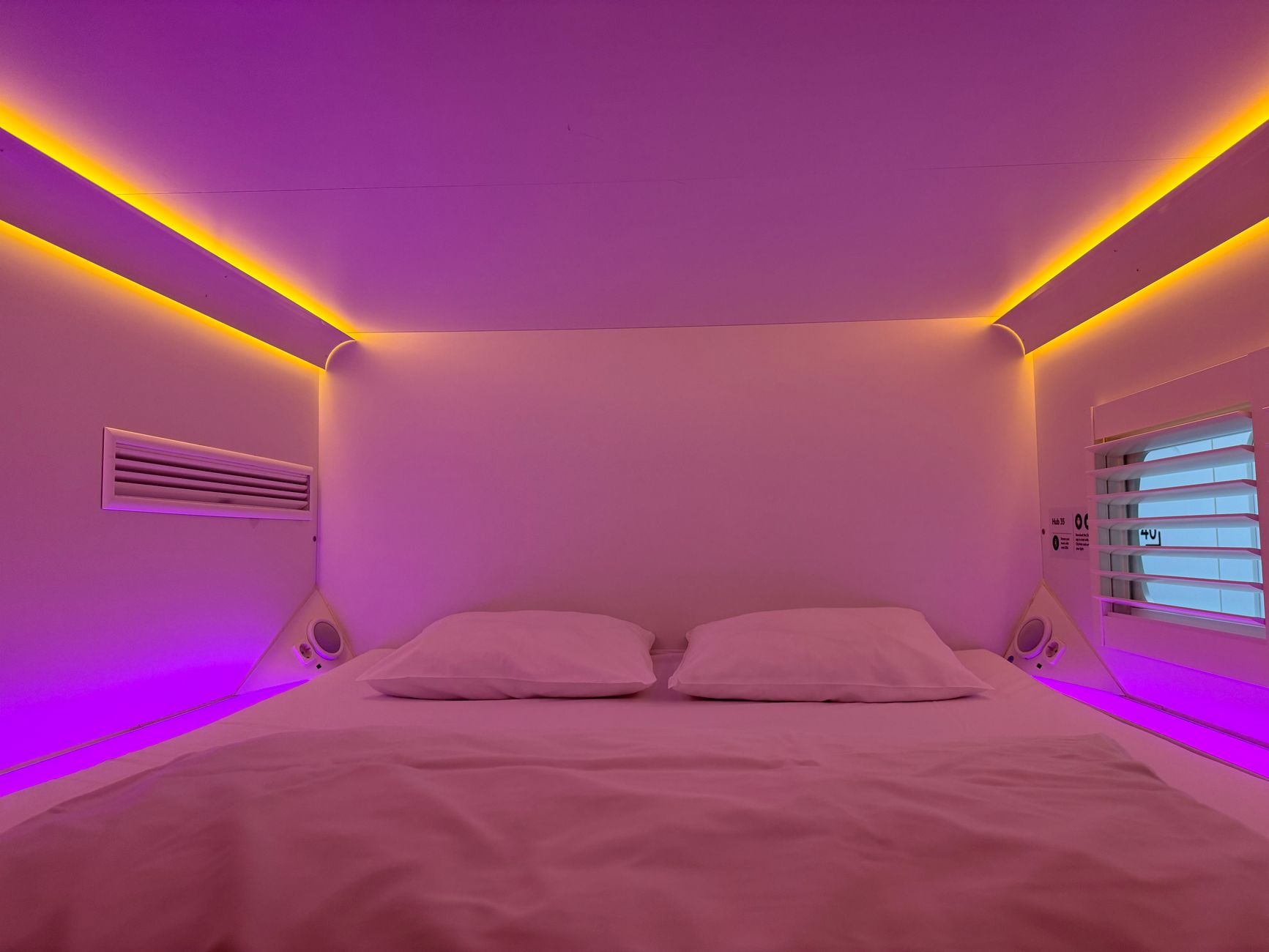
- Ibis Budget Milano Cassala (Porta Genova area) — the rooms are pods, essentially, but they are clean pods and they are €65–€85. Two tram stops from Navigli.
- Hotel Garda (near Centrale, on Via Napo Torriani) — old-school two-star, doubles from €80. Functional rather than charming, but the location is unbeatable for early train departures.
- Hotel Pavia (Sesto San Giovanni, near M1 Sesto Marelli) — doubles from €58 in low season, breakfast included, very Italian-business-traveler in flavor. The price is the point.
If you want a deeper dive into hotel-specific picks, my budget hotels and hostels in Milan guide goes through ten more.
The Airbnb strategy that actually saves money
Airbnb in Milan beats hotels on price in two specific situations: groups of three or more, and stays of seven nights or longer. For solo travelers on a 2–3 night stay, hostels and budget hotels almost always win once you factor in the cleaning fee. Here is how I filter:
- Set the neighborhood, not the radius. Search by neighborhood name (Loreto, Lambrate, Isola, Porta Romana) rather than dropping a pin on the Duomo. The pin approach gives you tourist-priced apartments. The neighborhood approach gives you Milanese flats.
- Filter for “Self check-in” — this almost always means a lockbox or smart lock, which means the host is not running it like a small hotel with surge pricing.
- Hit the 7-night threshold. Most Milan hosts have weekly discounts of 10–25% coded into their listings. The difference between a 6-night and a 7-night stay can be €100+.
- Watch for the hidden city tax line. As of April 2026, the tax on short-term rentals is €9.50 per person per night. Some hosts collect it in cash on arrival, others have it built into the booking. Always ask. A 7-night stay for two people is €133 in tax alone.
- Avoid “luxury” listings outside the center. If a one-bedroom in Lambrate is advertising “marble countertops and Bulgari toiletries,” you are paying for the marketing, not the location. The €65 plain flat across the street is the same metro stop.
For a longer breakdown of how to use the platform here, see Airbnb apartments in Milan.
Convents and religious guesthouses — Milan’s underused budget option
This is the category most guides skip entirely, which is strange because case per ferie (literally “houses for holidays,” run by religious orders) are often the best-value rooms in central Milan. You do not need to be religious. You do not need to attend anything. You do generally need to be back by a curfew, which is the trade-off.
- Istituto La Casa (Via Lattuada 14, Porta Romana) — singles from €55, doubles from €85, breakfast included. Garden, quiet, ten-minute tram to the Duomo. Curfew at midnight.
- Centro Sacro Cuore (Via Marco Ulpio Traiano, near Cenisio M5) — singles from €50, doubles from €80. Hostel-style but cleaner than any hostel. Bus to the center in 15 minutes.
- Casa per Ferie Protezione della Giovane (Corso Garibaldi 123) — women only, central, doubles from €60. Run by nuns, popular with female solo travelers and students arriving for short stays.
- Foyer Don Bosco (Via Mac Mahon) — primarily houses students during the academic year, opens to travelers in summer. Singles from €40, the cheapest credible room I have ever stayed in within Milan.
Booking these is harder than booking a hostel. Most have their own websites in Italian, some only respond to email or phone. Hospites.it and Monasterystays.com aggregate listings, but the prices are sometimes marked up — going direct via email almost always saves 10–20%.
Alternatives if you have flexibility
If you can shift around dates or are willing to sleep somewhere structurally different, the cheap-Milan ceiling drops further.
- University residences in July and August. Bocconi, Politecnico, and Università Statale all open student housing to travelers during summer break. Singles from €35–€55 per night. The Bocconi residences (Bocconi Residence Bligny is the most central) are well-located and well-maintained. Book through the universities’ own websites, not aggregators.
- Couchsurfing. Still active in Milan, particularly among design students and 20-something professionals. The community is small enough that hosts vet thoroughly — expect to exchange three or four messages before being accepted. Free, obviously, but bring a small gift and do not treat it as a hotel.
- House sits via TrustedHousesitters. Milanese owners travel a lot in August and during Christmas. A two-week sit in exchange for feeding a cat means zero accommodation cost. Setup time on the platform is real (you need references), but if you are traveling for a month or more, this is the move.
- Workaway in nearby Lago di Como. Not Milan, but a 50-minute train. Hostels and B&Bs around Como and Varenna take volunteers in exchange for room and board, and you commute in for Milan day trips.
The timing game — when Milan is cheap and when it is brutal
Milan’s price calendar is bimodal in a way that catches first-timers out. Most of the year is moderate. A handful of weeks per year, prices triple or quadruple, and the difference between booking the wrong Tuesday and the right Tuesday is the cost of your flight.
The expensive weeks, which I will list because they are non-negotiable:
- Milan Fashion Week — late February (women’s, roughly Feb 20–26 in 2026) and late September (women’s, roughly Sep 22–28). Also the men’s editions in mid-January and mid-June, slightly less brutal but still expensive.
- Salone del Mobile / Milan Design Week — mid-April (April 13–18 in 2026). This is the worst week of the year for accommodation. Hotels go to 4x normal rates. Hostels go to 3x. Airbnbs require a minimum five-night booking. If you must visit during Design Week, book ten months ahead or stay in Bergamo and train in.
- Major Fiera Milano trade fairs. The convention center at Rho hosts roughly 30 trade fairs per year. The big ones (HOMI in January, EICMA in November, Host in October) lift prices city-wide. Check the Fiera Milano calendar before booking.
- Milano-Cortina 2026 Olympics — February 6–22, 2026. Largely already past for most readers, but the post-Olympic Paralympics (March 6–15) and the lingering price effects through April are real.
The cheap weeks, conversely: mid-January (after the men’s fashion week ends), the first two weeks of March, late May through mid-June, and the first three weeks of November. If you can move your trip to one of these windows, the same hostel bed costs 40% less than the same bed in October.
Booking strategy: where to actually click
I have tested every major platform on Milan over the years. The pattern is consistent:
- Booking.com wins for hotels under €150 because of the Genius loyalty discounts. Hit Genius Level 2 (10 stays) and you get 10–15% off plus free breakfast on most properties. Free cancellation is standard, which matters in Milan because flight prices fluctuate enough that you may want to shift dates.
- Hostelworld is still the right platform for hostels — better filters for solo travelers, accurate dorm-bed pricing rather than “from” rates that mean nothing. Cancellation policies are tighter, though.
- Booking direct beats both for independent hotels under three stars. Email the property. Mention how many nights you want. Roughly half will quote you 10–15% under the Booking.com rate to avoid the commission.
- Airbnb is the answer for 7+ night stays and groups of 3+. Otherwise the cleaning fees destroy the value.
- Avoid Hotels.com, Expedia, and Trivago for budget bookings in Milan. The rates are not better, the customer service is worse, and the cancellation policies are non-refundable more often than they should be.
One more booking trick: many Milan hotels release unsold inventory at 6pm for same-night bookings at 30–40% discounts. The HotelTonight app surfaces these. I have walked into central Milan hotels in November paying €70 for rooms that were listed at €140 that morning.
What to avoid — and the listings that are scams
Cheap in Milan crosses the line into “regret” in predictable ways. The ones I see travelers fall for repeatedly:
- The blocks immediately around Milano Centrale, particularly Via Vittor Pisani and Via Vitruvio at night. The area is not dangerous in the daylight, but it has the highest concentration of aggressive panhandlers and petty theft in central Milan. A 1-star hotel on Via Vitruvio for €50 is cheap for a reason.
- Listings with no street address shown until after booking. Standard Airbnb practice is to show the neighborhood and a circle on the map. If the host is hiding more than that, it usually means the apartment is in Sesto, Pioltello, or somewhere further out being marketed as “Milan.”
- Walkups above the third floor with no elevator. Milanese apartment buildings have a quirk: the piano nobile (second floor in the European sense) was built for the well-off, and the higher floors were servants’ quarters. Many of these buildings still have no elevator. A “charming top-floor flat” can mean five flights of stairs with luggage. Search the listing’s photos for “ascensore” or message the host.
- Suspiciously cheap private apartments inside the inner ring. A whole studio near the Duomo for €45 a night is either a scam (deposit collected, listing pulled) or an illegal sublet that will get cancelled three days before you arrive. The realistic floor for whole flats inside the inner ring is €110 a night.
- Hostels marketed as “party hostels” if you want sleep. Three of the cheaper Milan hostels (you will recognize them by the cocktail-and-pool-table photos) are functional all-night party operations. Fine if that is what you want, miserable otherwise.
For context on broader travel costs and what to expect once you have your bed sorted, see how much a trip to Milan costs and the cheap eats Milan guide.
FAQ
What’s the cheapest area to stay in Milan?
Sesto San Giovanni, just outside the city limits, has the lowest accommodation prices while still being one M1 metro ride to the center. Within city limits, Lampugnano (M1 west) and Lambrate (M2 east) consistently come in 30–40% under central rates. For first-time visitors who want cheap but also want neighborhood character, Loreto is the best compromise.
Are hostels in Milan safe?
Yes, the established ones are. Ostello Bello, Babila, Madama, and Combo all have 24-hour reception, security lockers, and key-card room access. The main risk in Milan hostels is petty theft from unsecured lockers, not anything dramatic. Use the lockers, keep your passport on you, and you will be fine. Solo female travelers report consistently positive experiences at all five hostels I named above.
How much does a budget hotel in Milan cost?
In low season (mid-January through February, November through mid-December), expect €60–€100 per night for a double room in a 1–2 star hotel outside the center. In shoulder season, €90–€140. In high season, €120–€180. Add the new 2026 city tax of €4–€7 per person per night for budget hotels.
Is Airbnb cheaper than hotels in Milan?
For solo travelers on 1–3 night stays, no — cleaning fees of €40–€80 wreck the per-night math. For groups of three or more, or for stays of seven nights and up where weekly discounts kick in, Airbnb wins by 25–40%. The 2026 city tax for short-term rentals is €9.50 per person per night, which has narrowed Airbnb’s advantage somewhat.
What’s Milan city tax for accommodation?
As of April 1, 2026, Milan’s tourist tax is tiered by accommodation category: €4 per person per night for 1-star hotels, €5 for 2-star, €7.40 for 3-star, €10 for 4- and 5-star. Short-term rentals (Airbnb-style apartments) are €9.50 per person per night. Hostels and campsites are €3. The tax is capped at 14 consecutive nights and is collected at check-out, not at booking.
Can I find a place to stay in Milan for under €40 a night?
Yes, in three scenarios: a dorm bed at Combo or Madama in low season (€24–€34), a Couchsurfing arrangement (free), or a summer university residence room (€35–€55). Outside those, €40 is below the realistic floor for a private room in Milan.
Final thoughts
Milan rewards travelers who plan three things in this order: dates, neighborhood, then specific property. If you nail the dates — avoiding fashion weeks and Salone — you can stay almost anywhere on a budget. If you nail the neighborhood — one of the five rings I named — you can stay almost anywhere on a budget. If you only nail the property and ignore the other two, you will pay tourist prices regardless of how clever your booking technique is.
The Milan that exists in February at Hotel Pavia in Sesto, walking to a tram stop in light rain, eating a €4 panzerotto from Luini, riding the M1 to the Duomo for €2.20, is the same Milan that exists in April at the €450 Excelsior Gallia. The view from the room is different. Everything else is the same. For my money — literally — I will take the version that leaves €380 in my pocket for trains to elsewhere in Lombardy and a few good dinners. See the Milan transport guide for the metro logistics that make the cheap neighborhoods actually work.