The Leonardo da Vinci museum Milan visitors actually want — the big one with the submarine in the courtyard — is the Museo Nazionale della Scienza e della Tecnologia Leonardo da Vinci, on Via San Vittore 21, a short walk from the Sant’Ambrogio metro stop. I bring this up first because at least three Milan museums use Leonardo’s name, and people show up at the wrong one constantly. The science museum is the giant one, set inside a 16th-century monastery, with 50,000 square meters of galleries, working models built from Leonardo’s notebooks, steam locomotives, a Cold War submarine you can climb inside, and the bridge of an ocean liner reassembled indoors. Admission is €10. I’ve been four times and still haven’t seen everything.
This guide walks through what’s actually inside, how to get there, which extra tickets matter, where to eat afterward, and how to avoid the school-group tidal wave that hits on weekday mornings.
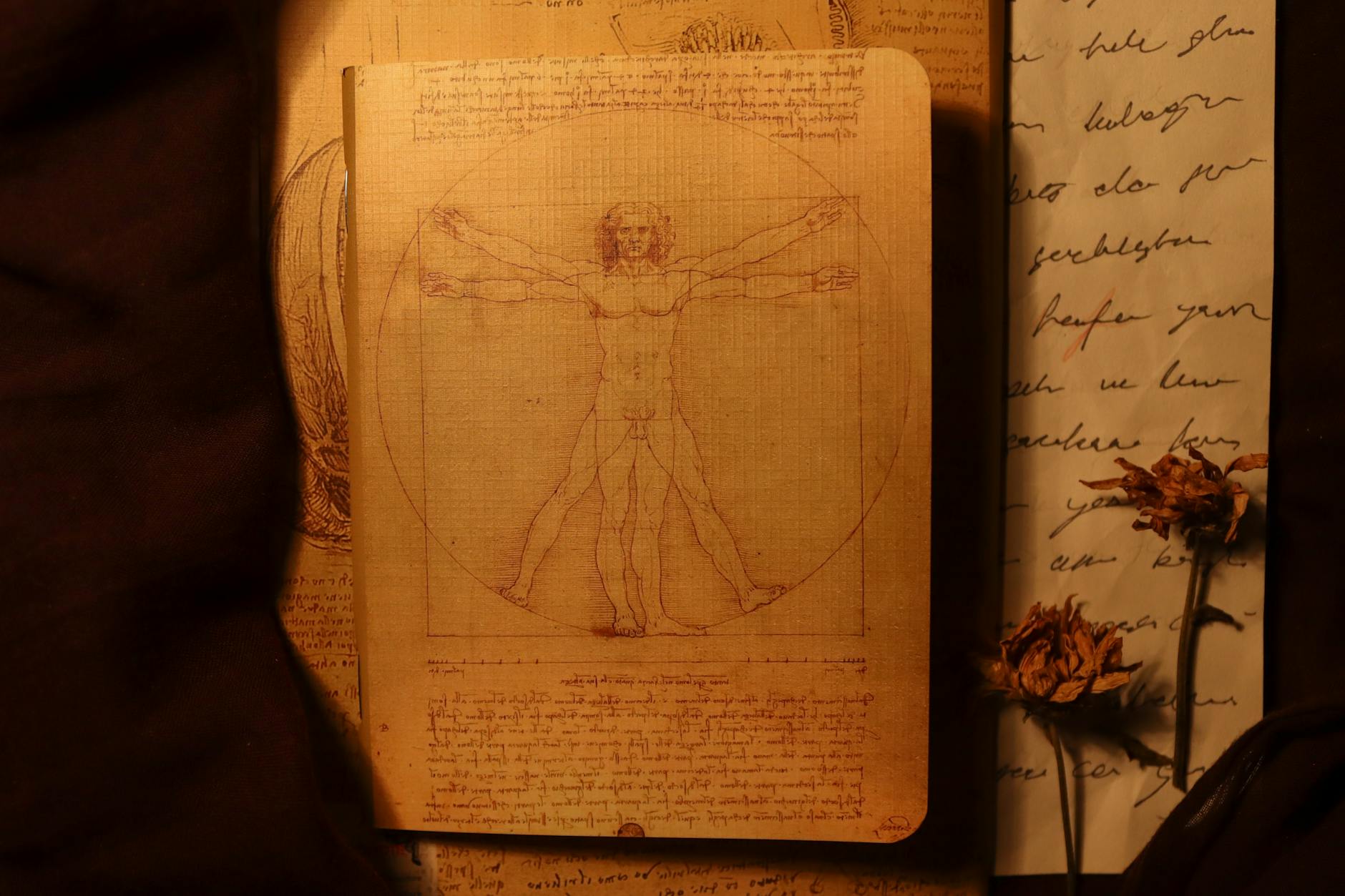
Why the Leonardo da Vinci museum in Milan is worth your afternoon
It’s the largest science and technology museum in Italy and one of the biggest in Europe. Founded in 1953, the museum sits in the former monastery of San Vittore al Corpo — bombed during World War II, restored in the late 1940s, and converted into a permanent home for Italy’s industrial and scientific heritage. The Leonardo collection is the centerpiece, but it’s only one section of a much larger institution that covers transport, communications, energy, materials, space, and food.
Most travelers I talk to think it’s a Leonardo-only museum. It isn’t. The Nuove Gallerie Leonardo, opened in 2019 for the 500th anniversary of his death, hold around 170 objects across 1,300 square meters — historical models commissioned from his manuscripts, original 16th-century paintings, frescoes pulled from churches, and contextual artifacts from the workshops he ran. That section alone is the largest permanent Leonardo exhibition in the world. Then you walk into the next wing and there’s an Olona steam locomotive from 1900. Outside, a submarine. Upstairs, a Vespa collection.
If you only have time for one museum on a culture-heavy day, the Last Supper probably wins for sheer iconic weight. But for the second museum slot — especially with kids, a partner who isn’t into Renaissance painting, or a rainy afternoon — this is the most flexible choice in the city. See more options in our Milan museums guide.
Three Milan museums named “Leonardo” — which one is which
This is the confusion that costs people a morning. Read this section before booking anything.
1. Museo Nazionale della Scienza e della Tecnologia Leonardo da Vinci (the subject of this guide)
The science and technology museum. Via San Vittore 21, near the Sant’Ambrogio basilica. Huge — plan three to four hours minimum. Leonardo gallery plus trains, submarines, planes, ships, space, energy. €10 base ticket. This is the one with the Toti submarine.
2. Leonardo3 Museum — Il Mondo di Leonardo
A private, immersive Leonardo-only museum inside the Galleria Vittorio Emanuele II, right at Piazza della Scala. Smaller — maybe four rooms, an hour at most. Around 200 working machine models built specifically for this exhibit, plus interactive screens and a digitized version of the Codex Atlanticus. Tickets run roughly €13-€16. Closer to the Duomo, more compact, more theatrical. If you have small kids and limited time, Leonardo3 can be a better fit than the big science museum. But it’s a different institution entirely — different ticket, different operator, different vibe.
3. Museo del Cenacolo Vinciano
This is the Last Supper. Il Cenacolo means “the refectory.” The museum is the former Dominican dining hall of Santa Maria delle Grazie, where Leonardo painted the mural directly on the wall between 1495 and 1498. It’s not a Leonardo museum in the broad sense — it’s one fresco, viewed in 15-minute slots, with tickets sold out two months ahead. Different ticket system, different neighborhood (Corso Magenta), different planning calculus entirely. Our Last Supper ticket guide covers how to actually get in.
So: if someone says “Leonardo museum Milan,” ask which one. The science museum is the big experience. Leonardo3 is the compact one near the Duomo. The Cenacolo is the painting.
Getting to the museum
Address: Via San Vittore 21, 20123 Milano. The main entrance is just past the Basilica of San Vittore al Corpo, and the ticket office is in the cloister on the right as you walk in.
By metro: Take M2 (green line) to Sant’Ambrogio. Exit toward Via Carducci, turn right, walk five minutes down Via San Vittore. You can also take M1 (red line) to Conciliazione and walk about 10 minutes — useful if you’re coming from central Milan attractions on the M1 corridor.
On foot from the Duomo: About 20 minutes, mostly straight down Via Torino and then via Corso Magenta. I usually walk it. You pass the entrance to Santa Maria delle Grazie on the way, which is convenient if you’re doing both in one day.
By tram: The 16 tram from the Duomo area stops near Carducci, a short walk from the museum.
Hours: Tuesday to Friday, 9:30 to 17:00. Saturdays, Sundays, and public holidays, 9:30 to 18:30. Closed Mondays, January 1, December 24, and December 25. Last entry is one hour before closing.
Tickets: €10 standard adult, €7.50 reduced (children 7-26, seniors 65+, students with ID), free for children under 6 and disabled visitors with a companion. The Toti submarine guided tour is a separate €10 add-on, sold for specific time slots — book this in advance because the slots sell out, particularly on weekends.
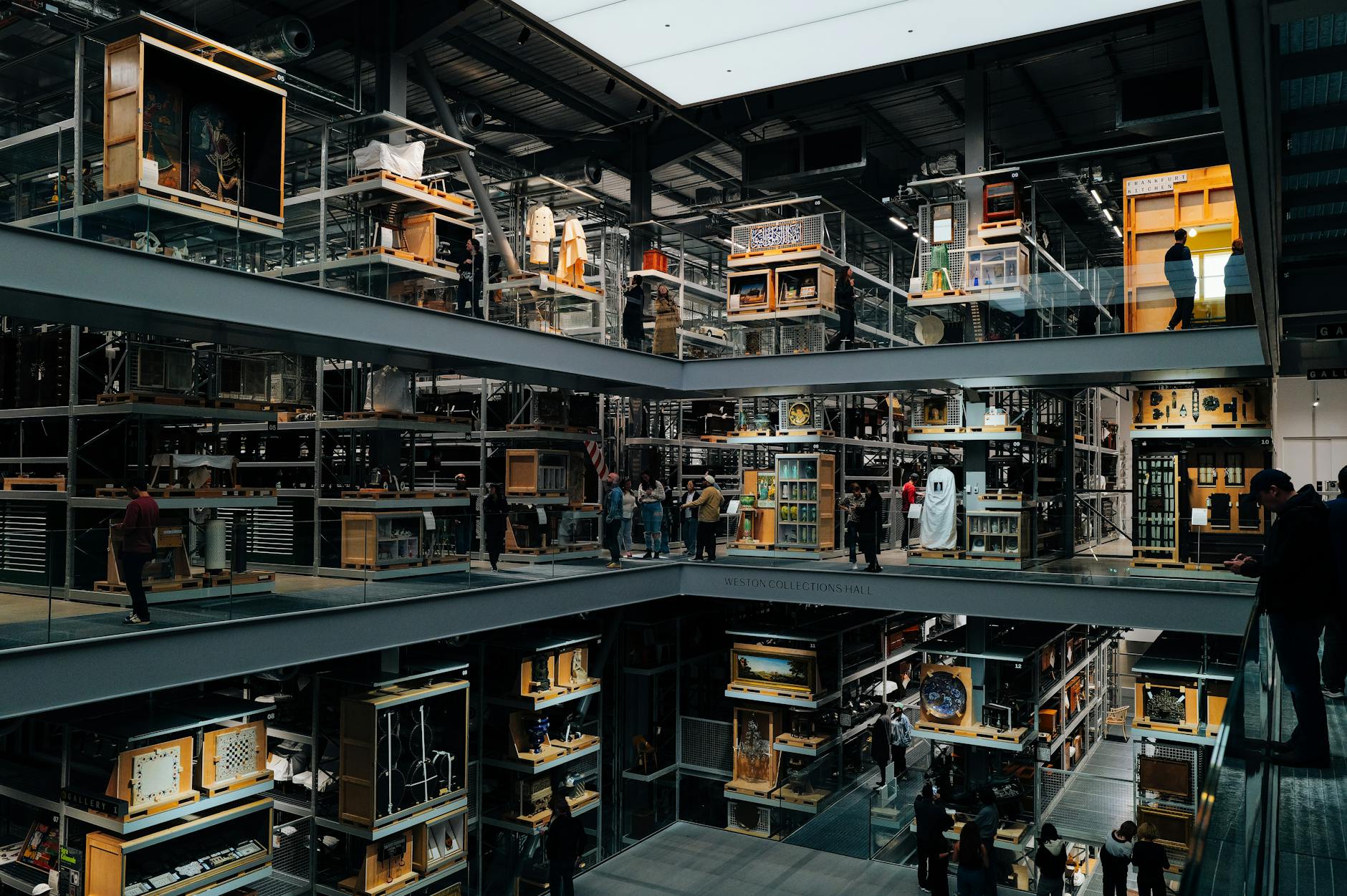
Layout and the main galleries
The museum is organized into themed wings spread across the former monastery and several added pavilions. The numbering can feel arbitrary on first visit, so a rough mental map helps.
Leonardo Galleries: The flagship section on the ground floor of the historic monastery building. New Galleries opened 2019. Walk in chronologically — Leonardo’s notebook studies, his work on flight, hydraulics, military engineering, urban design, and human anatomy. Models are wood or brass, built by Italian craftsmen between the 1950s and the 2010s using the original sketches as construction blueprints.
Naval and Air Transport pavilion: Hangars holding sailboats, racing yachts (including the Luna Rossa America’s Cup challenger), early aircraft, and the bridge of the Conte Biancamano ocean liner — yes, the actual ship’s bridge, dismantled and rebuilt indoors.
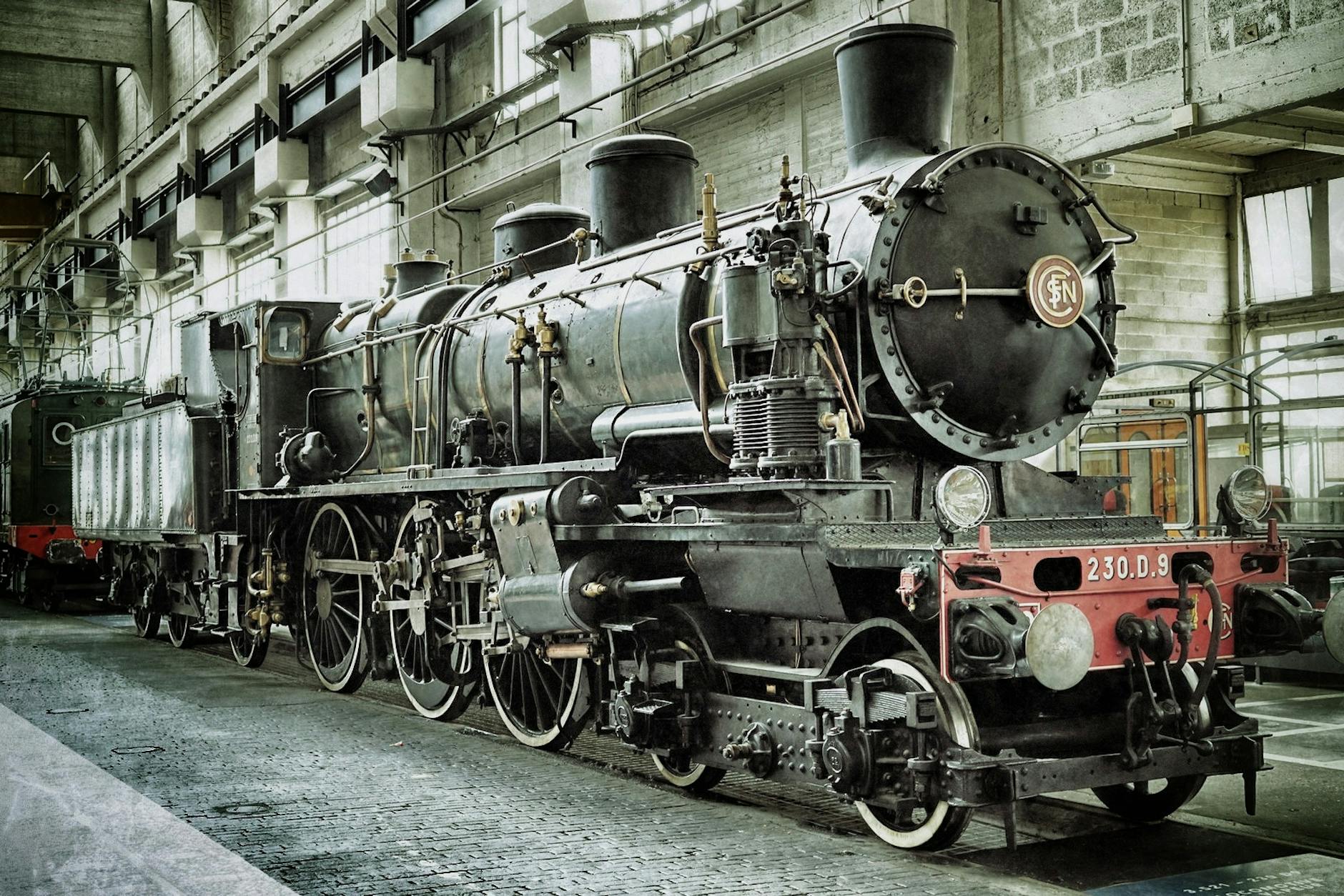
Rail Transport pavilion: Steam locomotives at full scale, including the Olona, plus the trams and electric trains that built modern Italy.
Toti Submarine Pavilion: A glass building constructed around the submarine after its 2005 journey through the streets of Milan on a 16-axle trailer — a logistics operation that took an entire night and required removing road signs along the route.
Space, Energy, Materials, Telecommunications: Upstairs in the monastery wings. Includes Italy’s only publicly displayed Moon rock fragment, gifted by NASA after Apollo 17.
Stanze del Cibo (Food Rooms): A newer section exploring food as science and culture — pasta machines, espresso, agricultural innovation.
The best exhibits, ranked by what’s actually worth your time
1. The Leonardo machine models
This is the section you came for, and it earns the billing. Roughly 130 working physical models built from Leonardo’s manuscripts — the screw helicopter, the self-supporting bridge, the diving suit, the bombard with adjustable trajectory, the parachute, the loom, the various flying machines. Some are full-scale. The interpretive panels include scans of the original notebook pages alongside each object, so you can see the leap from sketch to constructed mechanism. Allow 45 minutes minimum here. If you have a kid who builds Lego, double that.
2. Toti Submarine S-506 (extra €10, book ahead)
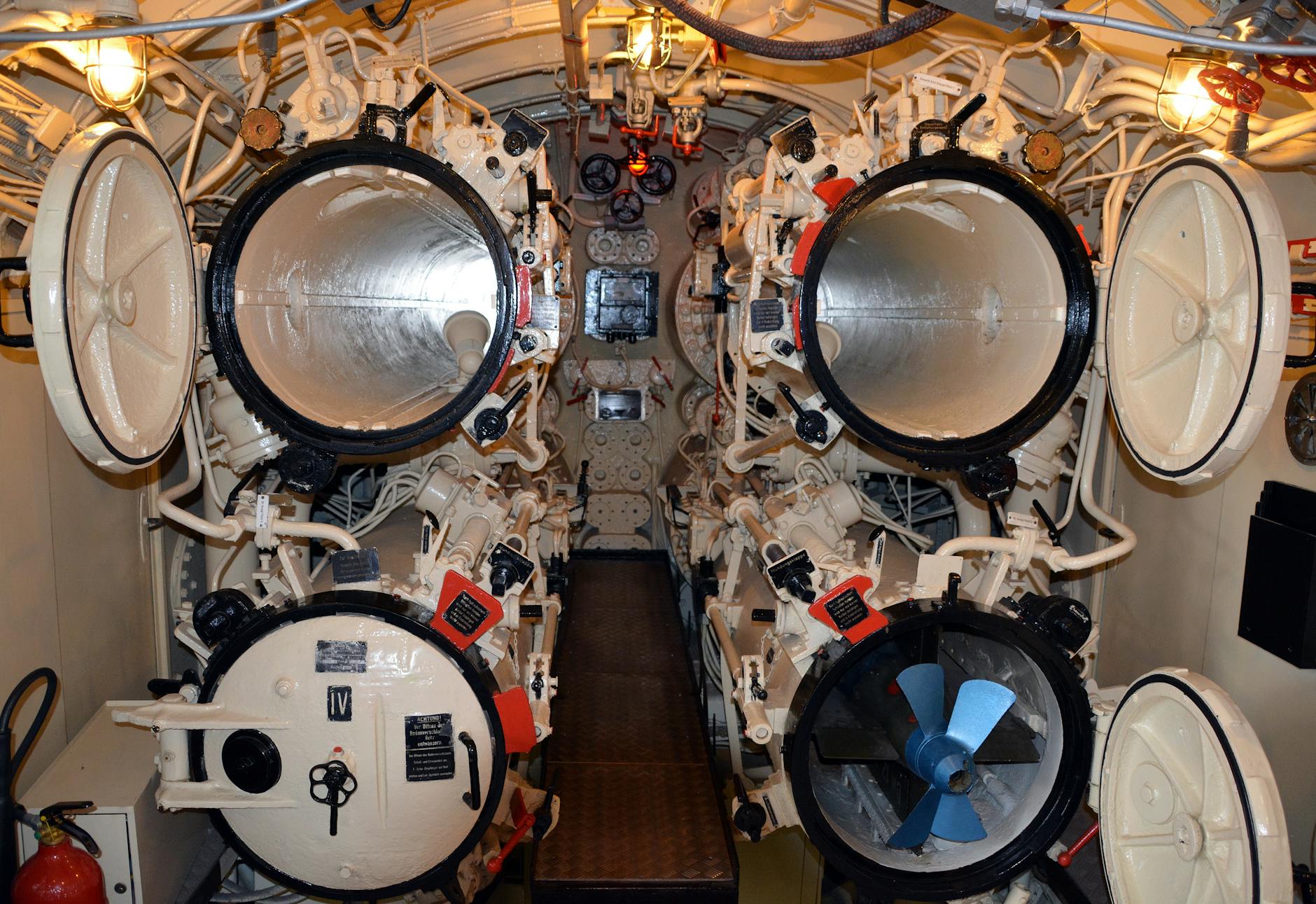
The Enrico Toti was the first submarine built in Italy after the Second World War, launched in 1967 to patrol the Mediterranean for Soviet vessels during the Cold War. After its 1997 decommissioning it was towed inland, then trucked through Milan to its final berth at the museum. The guided tour lasts about 25 minutes, runs in groups of seven, and takes you through the torpedo room, sonar station, engine room, and periscope. The passages are narrow, the steps steep, and children under 6 aren’t allowed inside. Skip if you’re claustrophobic. Otherwise — worth it. The combination of “Cold War history” and “actual submarine you stand inside” is rare.
3. Conte Biancamano ship’s bridge
The Conte Biancamano was a 1925 Italian ocean liner that carried passengers between Genoa and New York. When the ship was scrapped in the 1960s, the museum acquired her bridge and first-class decorative interiors intact and rebuilt them inside a hangar. You walk up onto the bridge, hands on the wheel, look out at — well, the inside of a museum hangar, but the illusion is convincing. Smaller kids love it. Adults who’ve taken transatlantic crossings will linger.
4. Olona Steam Locomotive (1900)
A working-size Italian steam train in the rail pavilion. You can climb into the engineer’s cab on certain days when the volunteer staff are running demonstrations. The pavilion also holds a 1928 electric locomotive and a section of original Milan tram, plus an early funicular car.
5. Stanze del Cibo (Food Rooms)
A surprisingly good newer wing about how Italian food culture intersects with chemistry, engineering, and design. Pasta machines from the 1800s, the first espresso machine patents, modern hydroponic experiments. Not the obvious draw, but anyone interested in Italian food culture will find it engaging.
6. Aviation hangar
Early Italian aircraft — including a Macchi MC.205 fighter from WWII — plus the Saiman 202 trainer and several Caproni civil aircraft. The Caproni name belongs to one of Italy’s pioneer aviation families; if you’ve seen The Wind Rises, this is the company.
7. The Vespa and motorcycle collection
Tucked into the transport section. Original 1946 Piaggio Vespa, plus the Lambretta and several racing motorcycles. Italian industrial design at its most compact.
Where to eat near the museum
Sant’Ambrogio is a real neighborhood, not a tourist trap, which means lunch options are honest. A few I’ve used:
Trattoria Milanese: Via Santa Marta 11, about 12 minutes’ walk toward the Duomo. Classic Milanese cooking — risotto alla milanese, cotoletta, ossobuco. Lunch around €25-€35 per person. Family-run since 1933. Book ahead.
Da Giordano il Bolognese: Via Sant’Antonio 1, also closer to the Duomo side. Bolognese specialties — tortellini in brodo, tagliatelle al ragù — done properly. Slightly more formal.
Spontini: Via Santa Radegonda 11 (small chain). Milan’s signature thick-crust slice pizza. Five minutes from Duomo, useful if you’re walking back. €6-€8 for a slice and a drink.
Bar Magenta: Via Carducci 13, three minutes from the museum. Classic Milanese bar — espresso standing at the counter for €1.20, decent panini, aperitivo in the early evening. Good for a quick coffee before going in or a Negroni after.
Pasticceria Marchesi: Via Santa Maria alla Porta 11a. The historic Milanese pastry shop, now partly owned by Prada. Worth it for the room more than the prices.
Visiting with kids — this is the family museum in Milan
If you’re traveling with children, this is probably the single best museum stop in the city. The hands-on Leonardo models, the actual submarine, the steam engines, the ship’s bridge — all of it works for ages 6 through teenager. The museum runs i.lab hands-on workshops on weekends and during school holidays, covering robotics, energy, food chemistry, and biotechnology. Sessions last 45-60 minutes, cost a few euros extra, and run in Italian (some in English on request — check the website schedule before you go).
Things to know with kids:
- Strollers are allowed in most galleries, with elevators between floors.
- Two cafés on site — one in the main cloister, one near the air and naval pavilion.
- Restrooms are spread across the wings; not always obvious. There’s a map at the entrance.
- The submarine has an age minimum of 6 and is not suitable for very small children or anyone uncomfortable in tight spaces.
- Buy a snack to bring in. Lunch lines at the café can be long during peak weekends.
For more family-friendly itineraries, see our Milan with kids guide.
Practical tips
- Buy the submarine ticket online in advance. The tour runs in small groups of seven, in fixed time slots, and Saturday slots tend to sell out a week ahead. The submarine ticket alone is €10 on top of the museum admission. You’ll need both.
- First Sunday of the month is free, but the trade-off is significant — the museum is rammed by 10am, the Leonardo galleries get clogged, and the submarine slots evaporate by mid-morning. I’d pay the €10 to come on a quieter day.
- The audio guide is an app, not a handheld. Download “Museoscienza” before you go, or connect to the museum Wi-Fi at the entrance and download on arrival. It’s free.
- Photography is allowed without flash and without a tripod. No commercial photography without permission.
- Large bags go in lockers — coin-operated, refundable. Backpacks under about 30 liters are fine to carry.
- Plan three to four hours minimum. A full visit including the submarine, lunch on site, and one i.lab workshop is closer to six hours.
- Combine with Santa Maria delle Grazie if you’ve secured a Last Supper slot — they’re a 10-minute walk apart. Many people pair the science museum with a 4pm or 5pm Cenacolo viewing.
The best time to visit
The museum is busiest on weekday mornings during the Italian school year — September through early June — when school groups arrive by the busload, mostly hitting the Leonardo galleries between 10am and noon. If you have any flexibility, here’s what I do:
Best: Tuesday through Friday from 14:00 onward. School groups clear out after lunch, and you have the Leonardo section to yourself by 15:00. The downside is the weekday closing at 17:00 — if you want a full afternoon, you need to start by 13:30.
Second best: Saturday or Sunday from 15:00 onward, when the morning family crowds have cycled out and the closing time extends to 18:30. Don’t do the first Sunday — that’s the free entry day and it’s chaos.
Avoid: Weekday mornings during school term. The Leonardo galleries become impassable in the 10:30-12:00 window. Also avoid the days immediately after Italian school holidays start (late June and the days around Christmas), when local families pack the place.
If you’re planning a longer Milan stay, our Milan itineraries guide sketches out three- and four-day plans that build this museum into a coherent sequence with the Pinacoteca di Brera, Fondazione Prada, and the Pinacoteca Ambrosiana, which holds Leonardo’s Codex Atlanticus.
FAQ
Is the Leonardo da Vinci museum in Milan suitable for kids?
Yes — it’s the most kid-friendly major museum in Milan. Hands-on models, a real submarine, steam trains, and weekend workshops. The submarine has a minimum age of 6 and isn’t suitable for anyone uncomfortable in tight spaces, but the rest of the museum works for ages 4 and up. Older kids (10+) will get more from the engineering content.
Do I need to buy timed tickets in advance?
Not for the museum itself — general admission is open entry during operating hours. But the Toti submarine guided tour requires a separate timed ticket, and those do sell out on weekends and during holiday periods. If you want to go on the submarine, book online a few days ahead.
How long should I plan to spend?
Three to four hours for a focused visit covering the Leonardo galleries, the submarine, and one or two transport pavilions. Five to six hours if you want to see everything and eat on site. Less than two hours feels rushed.
Is the Toti submarine tour worth the extra €10?
For most adults and teenagers, yes. It’s the only Cold War submarine in Italy you can tour, the guides know the technical and human history well, and the experience of standing inside a working military submarine is different from any other museum exhibit in Milan. Skip it if you’re claustrophobic, have mobility limits, or are traveling with children under 6.
Is the Leonardo3 Museum the same as this one?
No. Leonardo3 is a private, Leonardo-only immersive museum inside the Galleria Vittorio Emanuele near the Duomo. It’s about a quarter the size, focused entirely on Leonardo, and takes about an hour. The Museo Nazionale della Scienza on Via San Vittore is the large state museum covering Leonardo plus science and technology in general. Different museums, different tickets, different neighborhoods.
Can I see the Last Supper here?
No. The Last Supper is at Santa Maria delle Grazie, about 10 minutes’ walk away. The science museum holds Leonardo’s mechanical and engineering work, not his paintings. If you want to see the Last Supper, you need a separate timed ticket, generally booked two months ahead.
Final thoughts
I’ve recommended the Museo Nazionale della Scienza e della Tecnologia Leonardo da Vinci more times than any other Milan museum because it works for almost everyone. Engineers find the machine models compelling. Families spend half a day. Cold War history readers head straight to the submarine. People who saw the Leonardo show at the Louvre and want more come for the manuscripts and the 1:1 reconstructions. And it’s €10, which in 2026 Milan museum pricing is genuinely fair.
If you only have one museum slot and you’ve already seen the Last Supper, this is where I’d send you. If you’ve got two slots, pair it with the Pinacoteca di Brera the next morning for a clean split between Renaissance painting and Renaissance engineering. Either way — book the submarine in advance, come after 2pm, and bring a snack.