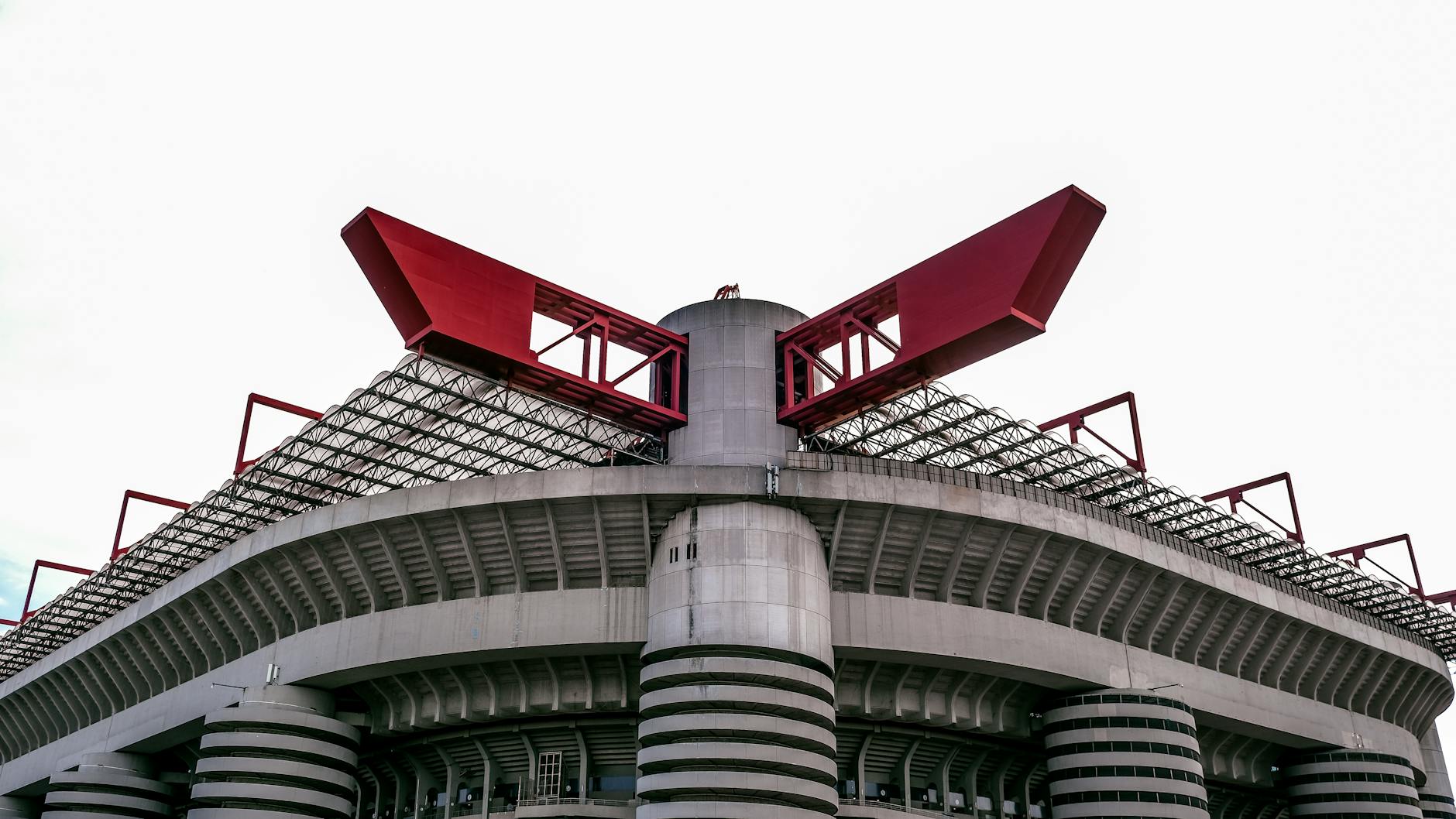
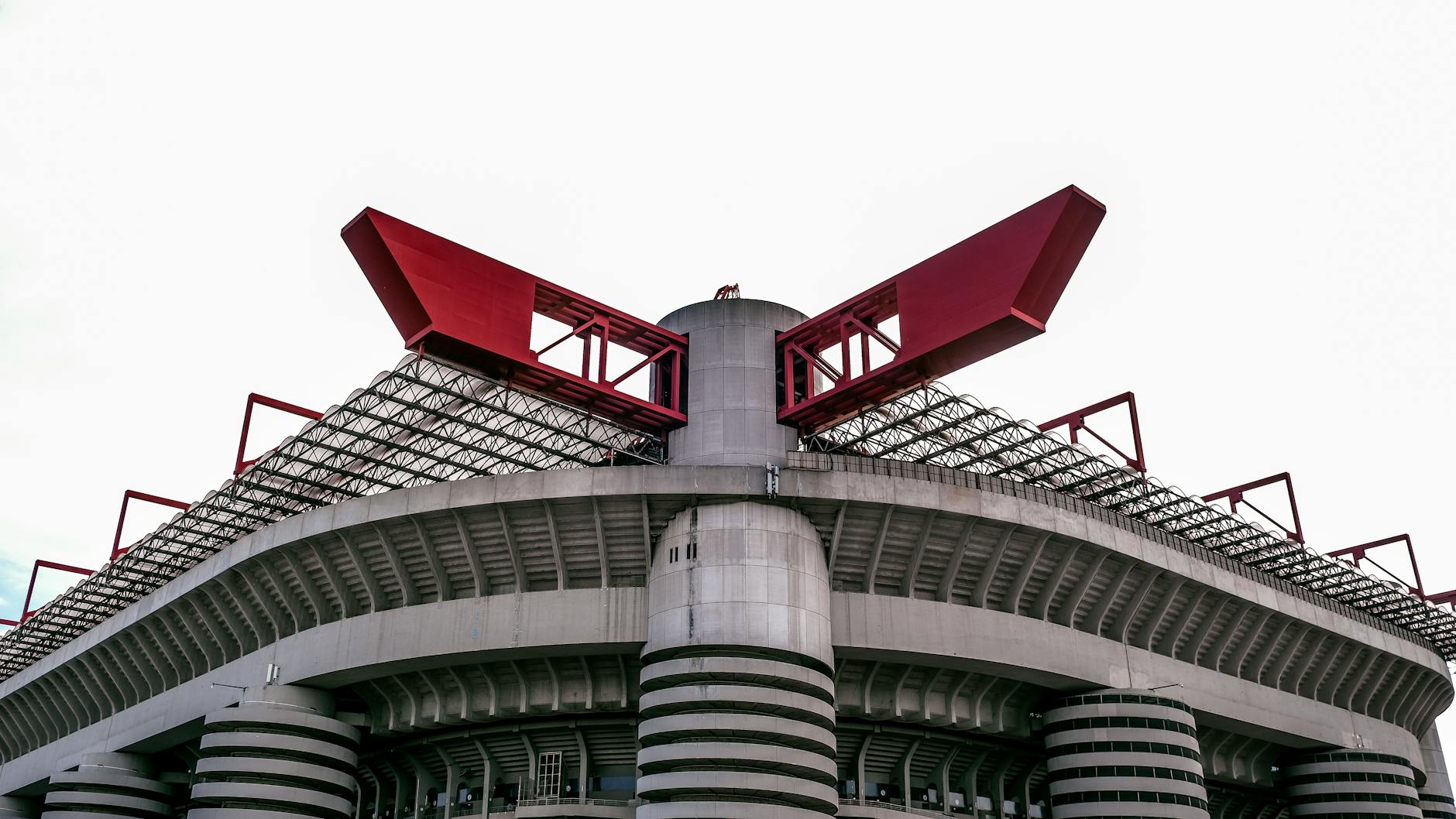
The first time I walked out of the players’ tunnel onto the edge of the pitch at San Siro, I forgot to take a photo for about thirty seconds. The San Siro stadium tour hits different than other ground tours in Europe because the architecture itself is theatrical — those red helical ramps spiralling up the outside, the cantilevered roof girders crisscrossing overhead, the steepness of the third ring. If you have any interest in football, design, or just the noise that 75,000 people can make, the Stadio Giuseppe Meazza is worth a morning. And with demolition now formally on the calendar, the window to see the old cathedral is closing.
If the stadium is the reason for the trip rather than an item on the list, our guide to where to stay near San Siro covers the hotels within walking distance.
Reaching the ground is straightforward on a quiet day and a different exercise on a matchday — our guide to getting to San Siro has both versions.
The tour shows you an empty stadium, which is a very different thing from a full one — if the dates work, our Derby della Madonnina guide explains how to get into the one night a year San Siro is at its loudest.
If a match would beat a museum, our Inter Milan tickets guide covers the official channels and what each sector costs.
Would rather see a match than a museum? Our AC Milan tickets guide covers where to buy and what each part of San Siro costs.
Coming for a match rather than the tour? Our football in Milan guide covers tickets, matchday transport and what the stadium’s sale means for visitors.
I’ve done the San Siro stadium tour three times across different seasons — once as a tourist in 2019, once with my nephew (8 years old, mostly there for the snack bar), and once last autumn after the Inter-Milan ownership deal had been signed. The tour has tightened up since the museum was renovated, prices have crept up, and the route now leans more on the AC Milan stadium tour story than it used to. Here’s everything I’d want to know before booking, including what’s open on match days, how the Skywalk works, and the realistic case for skipping the tour and going to an actual match instead.
Why San Siro (Giuseppe Meazza) is a football pilgrimage
San Siro opened in 1926 — yes, the centenary is happening right now in 2026 — originally built as a private project by AC Milan president Piero Pirelli. Inter Milan joined as co-tenants in 1947, and the ground was officially renamed Stadio Giuseppe Meazza in 1980 after the striker who played for both clubs. Most fans just call it San Siro, after the surrounding neighbourhood.
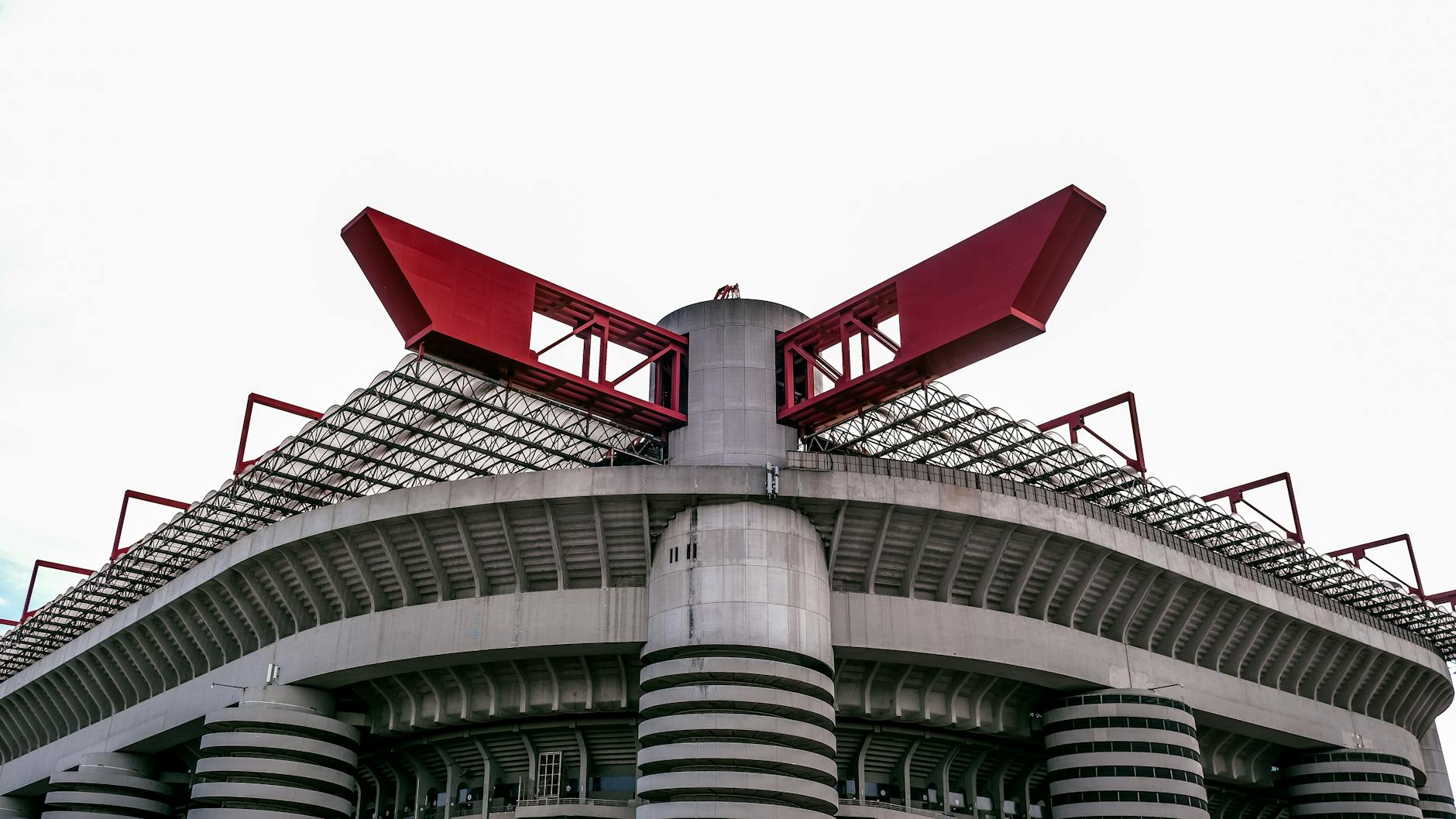
The current 75,817-capacity structure is the third major rebuild. The 1990 World Cup renovation added the third ring and those iconic red support towers, which is why it looks like a brutalist spaceship rather than a traditional bowl. UEFA has hosted four Champions League finals here (1965, 1970, 2001, 2016) plus the 1990 World Cup semi-final. The Italian press calls it La Scala del Calcio — football’s opera house — and that’s not just marketing. The acoustics in the upper rings during a derby are physical.
For visitors to Milan, San Siro slots in as the city’s third or fourth attraction depending on your interests, behind the Duomo and Last Supper. It’s the only major football ground in Western Europe that two top-flight clubs still share, which makes the Inter Milan stadium and AC Milan stadium tour conversation slightly absurd — they’re the same building.
Tour vs match day — which experience to choose
This is the first decision and it matters. If you’re in Milan for three or four days and can flex your schedule, check the fixture list before booking anything. The Serie A calendar usually drops in late June for the following season, with Champions League dates added a week before each round.
The tour gives you access to areas you can’t see on a match day — locker rooms, the tunnel, the press conference room — and runs daily for around 60 minutes. The atmosphere is calm, you can take your time, and tickets are guaranteed available. The trade-off is obvious: an empty stadium.
A live match gives you the city’s actual football culture: ultras in the Curva Nord (Inter) or Curva Sud (Milan), flares before kickoff, 75,000 people singing in unison. But you only see the public concourses and your seat. No tunnel, no locker rooms. Mid-table league games against teams like Empoli or Monza can sometimes be had for €25-35 in the upper third ring; a Milan derby or Champions League knockout will run €120-400+ for anything decent.
My honest take: if you’re a casual football fan or travelling with kids, do the tour. If you’re a serious supporter or want to see Milan at full volume, find a match — even a less glamorous one. If you have the time and budget, do both on different days.
Tour tickets, prices, hours, what’s closed on match days
The official Museum & Tour is run directly by the stadium (sansirostadium.com) and you can buy from third-party resellers, but I’d stick with the official channel — the price gap is small and you avoid voucher exchange headaches.
Current pricing for 2026 (in EUR):
- Fixed-date adult: €39 (€30 reduced for ages 6-14 and over 65)
- Open-date adult (valid 3 months): €44 (€34 reduced) — worth it if your plans might shift
- Family pack (2 adults + 2 reduced): €112
- Under 6: free, but you still need to register a ticket
- Skywalk add-on (March-October only): roughly €30 extra, walks the rooftop red structure at 55m
Opening hours: 9:30 to 17:00 (November-March) and 9:30 to 18:00 (April-October), with last entry one hour before close. The tour itself takes about 60-75 minutes if you don’t linger.
The match-day caveat is important. On the day of a match (or sometimes the day before for big European nights), the tour route shrinks dramatically. You typically lose access to the locker rooms, the tunnel, and pitchside — the route gets reduced to the museum plus a viewing point from the stands. The price doesn’t always drop accordingly. Check the opening calendar on sansirostadium.com before booking. If your only available day is a match day, I’d genuinely skip the tour and put the money toward match tickets, or visit another Milan attraction instead.
The route — locker rooms, players’ tunnel, pitch view, dugout, museum
The self-guided tour follows a fixed loop with audio panels and staff stationed at key rooms. Here’s what you actually see, in order:
- Entry concourse and trophy preview — you enter through Gate 14 on the south-east side, get your ticket scanned, and walk past a few introductory display cases setting up the AC Milan and Inter histories.
- Italia 110 & Lode exhibition — the centenary exhibit added for the 2026 anniversary, with original blueprints, vintage tickets, and footage of the first 1926 match (Milan 3-6 Inter, ironically).
- The Press Room — the same room where post-match conferences happen. You can sit at the manager’s table for photos. Smaller than it looks on TV.
- The Mixed Zone — the corridor where journalists corner players after matches. Functional, not exciting, but it leads to the good stuff.
- AC Milan locker room — open on non-match days. Personalised lockers (when set up for a fixture), the ice baths, the warmup area. The room is smaller than you’d expect for a club of Milan’s size.
- Inter Milan locker room — same setup, black-and-blue theming. Inter’s room felt slightly more modernised when I was last there.
- The Tunnel — the famous walk. You step out of the tunnel into pitchside view with the stands rising around you. This is the photo everyone wants.
- Pitch perimeter and dugout — you can sit in the home dugout (which alternates between Milan and Inter depending on the week), touch the grass at the edge, but you don’t walk on the playing surface itself.
- The Museum proper — the largest section by floor space. Trophy cabinets, jerseys, memorabilia from both clubs.
- Skywalk (optional add-on) — exits via Tower 4, walks the red rooftop structure between towers, returns via the third ring concourse. About 30 minutes.
Numbered photo points are marked throughout — there’s usually a queue at the tunnel exit because everyone wants the same shot. Go early in the day (9:30 slot) to avoid this.
Inter vs Milan museum sections — trophies and what to look for
The museum is laid out roughly half-and-half, with shared areas in the middle for joint history and the European competitions both clubs have won. Don’t miss:
- The 1969 Intercontinental Cup — the last time Milan won club football’s old world championship in dramatic fashion, predecessor to today’s FIFA Club World Cup.
- The Treble case (Inter 2010) — Serie A, Coppa Italia, and Champions League under Mourinho. The only Italian club to win a continental treble.
- Paolo Maldini’s shirts — multiple eras represented, from his 1985 debut to the 2007 Champions League final.
- Ronaldo (the original) memorabilia — Inter’s late-90s era, including the famous yellow boots from his second debut.
- The 1990 World Cup section — Italia ’90 had San Siro hosting all of West Germany’s group games. Tournament posters, original ticket stubs, and some excellent photography.
- Curva banners and ultras culture — a small but worthwhile exhibit on the city’s two fan cultures, with old banners from Brigate Rossonere and Boys San.
The museum gift shops are split by club — buy your AC Milan scarf in the red-and-black section, your Inter scarf in the black-and-blue section, and never mix them up unless you want a fight outside the metro station.
Going to an actual match — how to buy AC Milan and Inter tickets safely
The official sources are the only ones I’d trust:
- AC Milan: acmilan.com/en/tickets — sales open about 2-3 weeks before a fixture, members get earlier access.
- Inter Milan: inter.it/en/biglietti — same structure, with priority for Siamo Noi members.
- Vivaticket and TicketOne: the official Italian secondary sellers — legitimate, but check the source club’s website first.
You’ll need to enter the passport or ID number of every person on the ticket. This is enforced — turnstile staff scan IDs against tickets and they will refuse entry if the names don’t match. Don’t buy from StubHub, Viagogo, or any “fan resale” site for Italian football. Tickets get cancelled regularly when the club detects resale, and you lose the money.
Pricing rough guide for Serie A 2025-26 season:
- Third ring (upper tier), non-marquee fixture: €25-45
- Second ring, decent league game: €60-110
- First ring (lower bowl): €120-220
- Curva (standing/singing section, fixed-fan area): €25-40 but harder to access as a tourist — you often need club membership
- Milan derby or Champions League knockout: add 50-150% to all of the above
Kickoff times for Serie A are usually 12:30, 15:00, 18:00, or 20:45. Champions League is almost always 21:00 (9pm) on Tuesday or Wednesday. The metro stays open until just after midnight on match days, but if your match runs to a late finish, plan a fallback like a taxi via FreeNow or IT Taxi.
Getting there from central Milan
The transport situation improved massively when the M5 (lilac line) extension opened in 2015. Before that, San Siro was a genuine hassle. Now:
- Metro M5 (lilac): San Siro Stadio is the terminus. From Duomo, take M1 (red) to Lotto, then change to M5 toward San Siro Stadio. Total trip 25-30 minutes, €2.20 one-way standard ATM ticket.
- Walking from Lotto: if M5 is crowded (which it is before kickoff), get off at Lotto on the M1 and walk 15 minutes north-west along Piazzale Lotto and Via Tesio. Often faster than waiting for the shuttle metro on derby days.
- Tram 16: runs from central Milan (near the Duomo area) all the way to San Siro. Slower but scenic, about 35-45 minutes. €2.20.
- Shuttle bus on match days: ATM runs extra services from Lampugnano and Cadorna for high-demand fixtures. Look for the temporary “Stadio” signs.
- Taxi from Duomo: €15-22 normally, €25-35 in match-day traffic, and the last kilometre will be slow.
For more on how the Milan metro and ATM ticketing work, my Milan transport guide covers the contactless tap-in system that now replaces paper tickets at most stations.
Where to eat in the Lotto/QT8 area before kickoff
The area around San Siro isn’t a restaurant district — it’s residential, with a lot of 1960s apartment blocks. But there are a handful of solid options if you don’t want to be funnelled into the stadium’s overpriced concession bars. All within 10-15 minutes’ walk of the ground:
- Trattoria Mirta (Piazza San Materno area) — traditional Milanese, ossobuco con risotto for around €22, cotoletta alla milanese €18. Family-run, the kind of place where the owner remembers your face on a return visit. Book ahead for match days.
- Pizzeria Spontini Lotto (Piazza Stuparich) — the Milan chain everyone tells you about, and the Lotto branch is reliable. Thick-crust slice of margherita €5.50, takeaway in 90 seconds. Perfect pre-match fuel.
- Bar Cesare (Via Tesio) — old-school neighbourhood bar, espresso €1.20, aperitivo spritz €7 with included snacks. Locals here are mostly Inter fans on derby days, so read the room.
- Da Giannino l’Angolo d’Abruzzo (Via Rosolino Pilo, slightly further but worth the walk) — Abruzzese cuisine, hand-cut pasta around €14, lamb dishes €20-25. One of the few places in this part of Milan where the cooking has real character.
- Panino Giusto Lotto — gourmet Italian sandwiches, €9-13 each, fast, and they have a decent wine list if you want something slightly elevated before a 18:00 kickoff.
If you’d rather build the day around food and then walk to the stadium, head to CityLife or Sempione in advance — both have proper restaurant scenes and are 15-20 minutes from San Siro by tram or metro.
Practical tips (safety, scarves, kickoff times, photography)
San Siro is genuinely safe — Milan’s police presence on match days is heavy, especially around the metro exits. Pickpockets work the platform at San Siro Stadio in the post-match crush, so keep your phone deep in a zipped pocket on the way home.
Scarf etiquette: buy a scarf inside the stadium shop or at the official kiosks, not from the unlicensed sellers on the street outside (they’re often counterfeit and the police occasionally crack down). Match colours to your seating area — wearing Inter colours in the Curva Sud Milan section is not just rude, it’s not allowed and stewards will move you.
Photography during matches: phones are fine, but professional cameras with detachable lenses over 20cm are restricted in most sections. For the tour itself, all cameras are welcome, but tripods are not.
Bring layers. The upper rings catch wind year-round, and the third tier in February can feel arctic. Even September evenings get cool inside the bowl after sundown.
For families, the tour works fine for kids 6 and up — there are interactive screens in the museum and the locker rooms hold attention. Under 6, you’ll be carrying them for the steeper sections. My Milan with kids guide goes deeper on family-friendly itineraries.
Future of San Siro — demolition plans, what to know
This is the part that genuinely affects whether you should prioritise visiting now. The Inter and Milan clubs purchased San Siro and surrounding land from the city of Milan in November 2025 for €197 million. The new stadium project, designed by Foster + Partners with MANICA, will be a 71,500-seat ground built immediately adjacent to the current site.
Confirmed timeline as of early 2026:
- February 2026: San Siro hosts the Opening Ceremony of the Milano-Cortina Winter Olympics on 6 February — the stadium’s last global moment in current form.
- May 2026: target groundbreaking for the new stadium.
- October 2027 to October 2030: main construction period.
- December 2030: projected inauguration of the new ground.
- 2031-2032: demolition of most of the existing San Siro, with portions of the Curva Sud and the south-east corner preserved and converted into a permanent museum.
- 2032: European Championship hosted by Italy and Turkey — the target for the new stadium to be fully operational.
The current stadium will keep hosting matches throughout the construction period until the new ground opens. So if you’re in Milan any time between now and late 2030, the existing San Siro stadium tour is still operating. After 2030, only the preserved sections will remain accessible, and the museum will move into that retained structure.
If you’ve ever told yourself you’ll see San Siro “next time”, this is the trip to do it.
Combine with nearby attractions
The stadium area itself is residential, but the wider zone has some genuine highlights you can stack into a half-day:
- CityLife — Milan’s contemporary architecture district with the Hadid, Isozaki, and Libeskind towers, plus a large shopping centre. 10 minutes by M5 from San Siro Stadio.
- Lampugnano — the main intercity bus terminal, useful if you’re combining the stadium with a day trip to Bergamo or Como.
- QT8 and Monte Stella — the artificial hill built from WWII rubble, now a forested park with city views. 15 minutes’ walk from San Siro. Covered in my outdoor activities in Milan guide.
- Trotto racetrack — the harness-racing track adjacent to San Siro, an oddly preserved 1925 facility. Mostly local, no tourists, occasional evening meetings worth a beer.
- Ippodromo Snai San Siro — the thoroughbred racetrack with the famous Leonardo da Vinci horse sculpture, recreated from Leonardo’s lost design. Free to enter on non-race days.
For a full afternoon, I’d recommend pairing the stadium tour with CityLife and a coffee at the new Generali Tower base, then heading back centrally to the Castello Sforzesco or Bosco Verticale via M5.
FAQ
How long does the San Siro stadium tour take?
Plan 60-75 minutes for the standard self-guided tour, plus 30 minutes if you add the Skywalk. Allow extra time for queuing at the tunnel photo point on busy summer days.
Can you actually walk on the pitch?
No — you walk pitchside and can sit in the dugout and touch the grass at the perimeter, but the playing surface itself is roped off. The pitch is replaced multiple times a year and the groundskeepers are protective.
Is the San Siro tour worth it for non-football fans?
Honestly, mixed. The architecture is impressive and the engineering is interesting, but if you’ve never watched a Serie A match and don’t care about Maldini or Zanetti, you’ll find the museum sections long. Casual visitors should consider the Duomo rooftop or the La Scala opera house instead.
What happens to the tour during construction of the new stadium?
The current Museum & Tour will keep operating through late 2030 while the new stadium is built alongside. After that, a smaller museum will open in the preserved Curva Sud section. Specifics will be confirmed closer to the date.
Can I see both AC Milan and Inter Milan on the same trip?
Yes — both clubs play at San Siro, and most weekends one of them is at home. Check both fixture lists for your dates and you can often catch a Saturday Milan match and a Sunday Inter match in the same weekend.
Are San Siro tickets refundable?
The fixed-date tour ticket is non-refundable but can be rescheduled with 48 hours’ notice. The open-date ticket gives you 3 months of flexibility for around €5 extra. Match tickets bought direct from the clubs are generally non-refundable unless the match is postponed or cancelled by the league.
Final thoughts
San Siro is one of those buildings that won’t exist in its current form much longer, and the combination of architectural strangeness, twin-club history, and Italian football culture makes the San Siro stadium tour a fair use of half a day in Milan. The €39 ticket isn’t cheap, the location takes a metro change, and the empty-stadium feel of the tour isn’t for everyone — but the tunnel walkout still gives me a kick three visits in.
My recommendation: if you’re a football person, book a match. If you can’t get a match, book the tour. If you can do both, do both on different days. And if you’re in Milan in 2026 with the centenary exhibit running and the Olympics having just lit the place up, you’re seeing the old San Siro at its absolute peak — and very probably for the last time before the bulldozers move in. Pair it with the broader things to do in Milan list and you have a genuinely good Milan day.