If you only see the Duomo, you miss the city. The serious Milan churches to visit sit in side streets behind the cathedral, in the medieval quarters around Sant’Ambrogio, and along the canals south of the Porta Ticinese. I’ve been church-hopping in Milan for years, and the pattern keeps repeating: tourists queue ninety minutes for the Duomo terraces, then walk past a 4th-century basilica with original Byzantine mosaics two stops away on the tram. This guide covers ten chiese I’d send any friend to before they buy a second Duomo ticket. Most are free. Some are walk-up. One has a wall of human skulls. All of them tell you something the cathedral doesn’t.
For what Lombardy was building before the Gothic arrived, take the train south: the Pavia day trip takes in two outstanding Romanesque basilicas and the Certosa’s extraordinary carved facade.
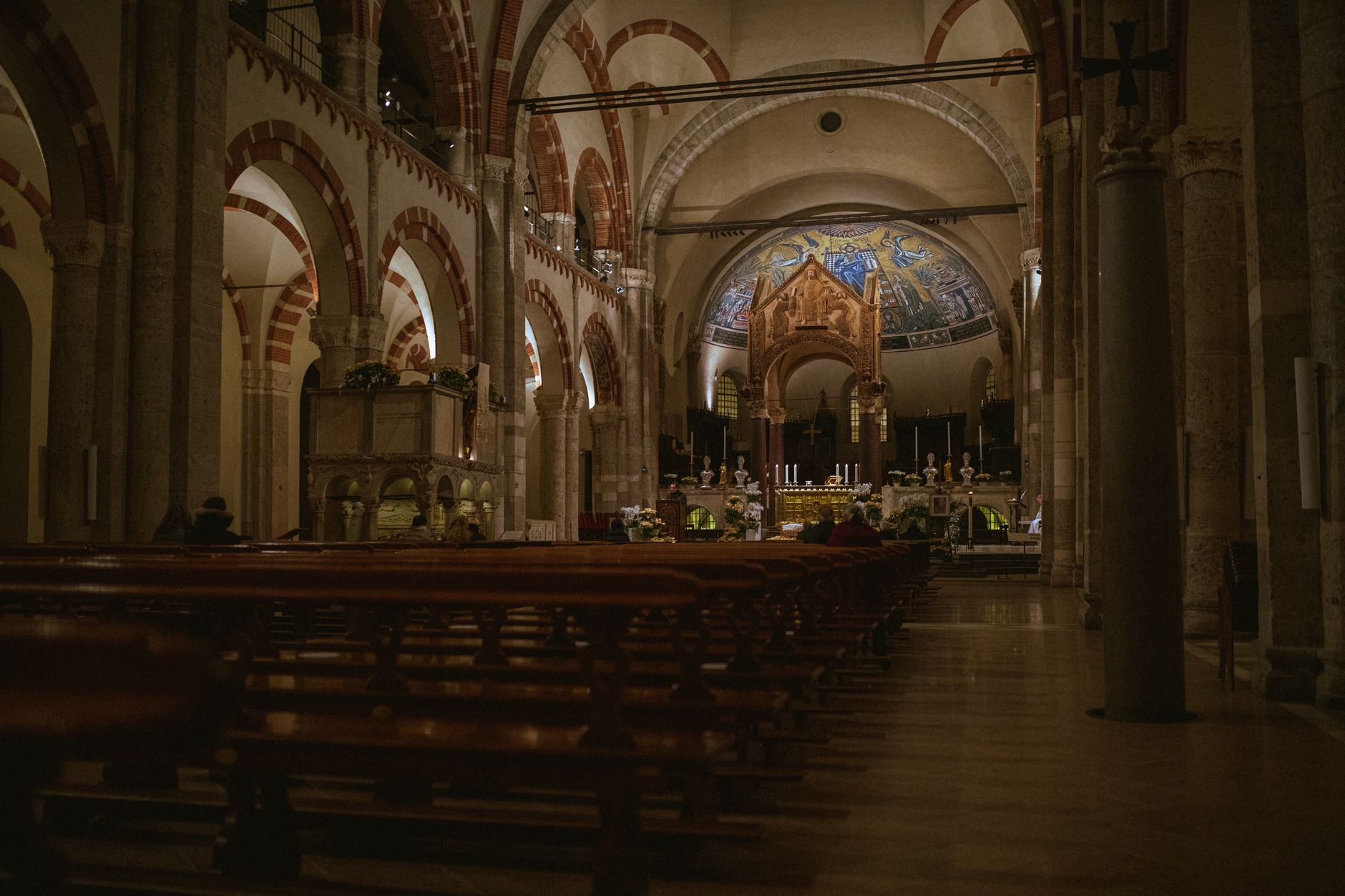
Why Milan’s churches are the city’s secret art collection
Milan was the capital of the late Western Roman Empire under Diocletian and Constantine. That fact alone explains why the city has 4th-century basilicas that predate most of what you’ll see in Rome’s tourist circuit. Bishop Ambrose, who baptized Augustine here in 387, personally founded four basilicas across the city — one for the apostles, one for the martyrs, one for the virgins, and one for the prophets. Three are still standing and still in use.
What you get inside is not the Duomo’s late-Gothic theatre. You get layered time: 4th-century mosaics under a 12th-century Romanesque nave under a 17th-century Baroque chapel under a Bramante perspective trick from the 1480s. The art is the kind museums would frame and charge fifteen euros for — Bernardino Luini frescoes, a Vincenzo Foppa cycle, a Bramante illusion that fooled everyone in Lombardy for a century. Most of it is free to look at. You drop a coin in the lighting box and stand under it.
The other thing worth knowing: Milan’s churches function. People come at 6 p.m. for vespers, brides arrive on Saturdays, school groups troop in at eleven. You’re not visiting a museum. You’re sharing a room.
How to plan a church-hopping day in Milan
A few logistics before the list. Entry to almost every church here is free, with two exceptions: the Portinari Chapel inside Sant’Eustorgio (about 6 euros) and the museum sections inside Sant’Ambrogio and San Maurizio (small fees, often combined). The Last Supper at Santa Maria delle Grazie is a separate timed ticket — book weeks ahead.
Dress code is enforced and you will be turned away. Shoulders covered, knees covered, no beachwear. I keep a thin linen scarf in my bag from May through September; it’s the easiest fix for sleeveless tops. Men: long trousers or shorts at the knee, no tank tops. Hats off inside.
Photography is allowed without flash in nine of the ten churches below. The Portinari Chapel forbids it. Donations of 1-2 euros for lighting boxes are how the art stays visible — use them. Most churches close midday between 12:30 and 3 p.m. for lunch and rest. The reliable window is 9-11:30 a.m. and again 3:30-6 p.m. For more route planning, see our Milan things to do guide and attractions overview.
10 Milan churches worth your time
1. Basilica di Sant’Ambrogio
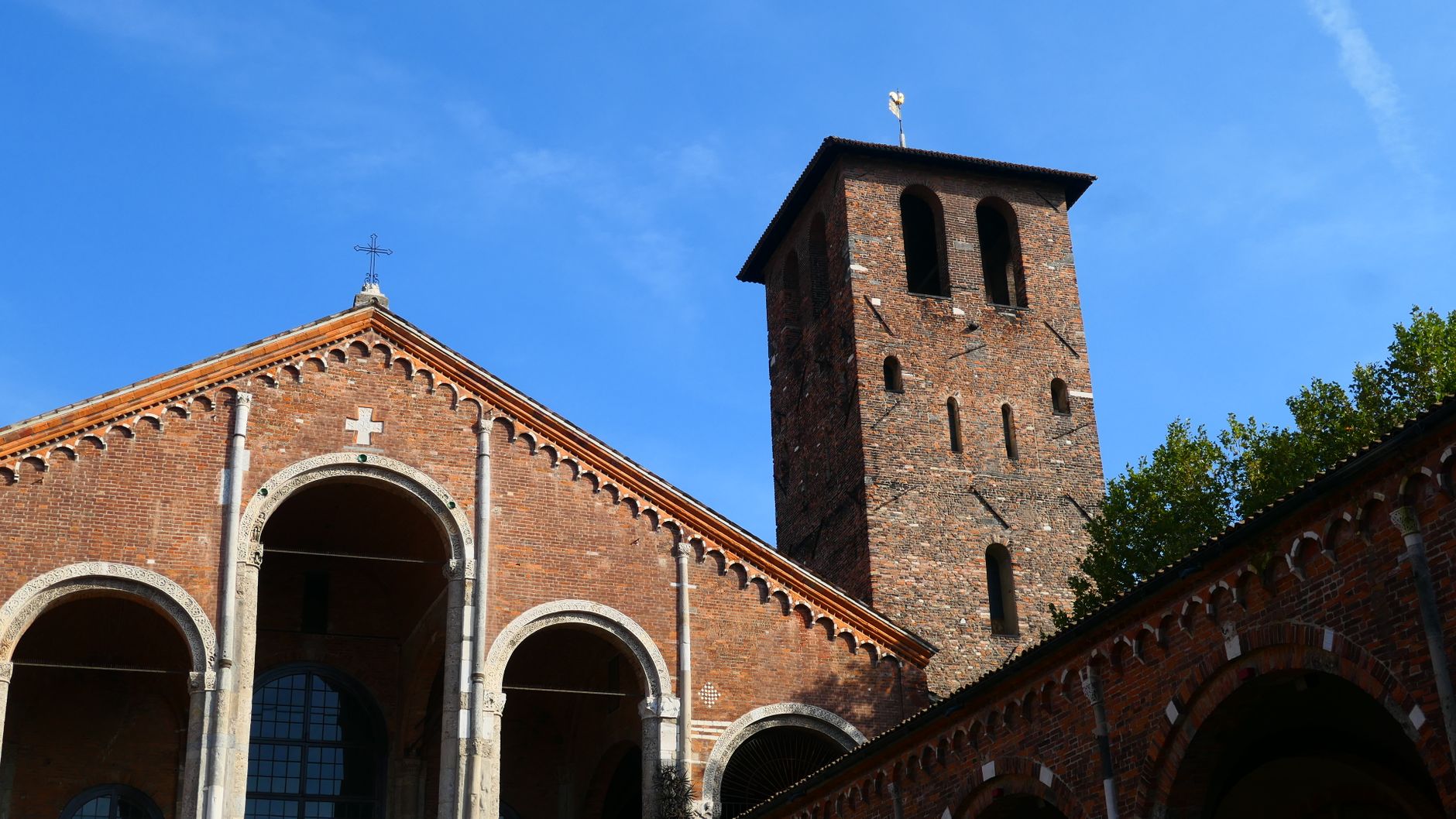
If you only have time for one, make it this one. Built between 379 and 386 by Saint Ambrose himself on the site of a Roman necropolis, Sant’Ambrogio is the prototype of Lombard Romanesque architecture — the two asymmetric bell towers (one 9th century, one 12th) are the model copied across northern Italy for the next four hundred years. The atrium with its arcaded portico is the most photogenic in the city. Inside, walk to the high altar: the Paliotto d’Oro is a gold-and-enamel altar front from 835, signed by the goldsmith Vuolvinio, and one of the great surviving Carolingian artworks. Underneath, in the crypt, you can see the skeletons of Ambrose, Gervasius, and Protasius laid out in their bishop’s vestments. The mosaic in the apse — Christ enthroned between saints — runs from the 4th to the 13th century in patches. Free entry, small fee for the museum and treasury. Closest metro: Sant’Ambrogio (M2). Allow an hour.
2. Basilica di San Lorenzo Maggiore
The 16 Corinthian columns standing in the piazza in front of San Lorenzo are Milan’s most visible piece of Roman ruin — second or third century, reassembled here in the late 4th century when the basilica was built. The church is the oldest round-plan church in the western world still standing. Walk past the columns, through the brick facade, and inside you’re under a great octagonal dome rebuilt after a 16th-century collapse. The reason to come is the Cappella di Sant’Aquilino on the right side: pay 2 euros, push through the iron gate, and you’re standing in front of 4th-century Byzantine mosaics — Christ teaching the apostles, and a fragment showing the rape of the Sabines that may be earlier still. Down the stairs behind the chapel are Roman foundation stones from the amphitheatre, recycled when the basilica went up. Free for the main church. Closest tram: Line 3 from Duomo to Corso di Porta Ticinese.
3. Santa Maria delle Grazie
The Dominican convent that holds Leonardo’s Last Supper is itself one of Milan’s better Renaissance churches, and most Last Supper visitors miss it. The dome and tribune at the east end were designed by Bramante in 1492 — a perfectly square plan topped by a coffered hemisphere, painted terracotta and white, and it’s the moment Lombard architecture stopped being Gothic. The main nave, by an earlier architect, keeps the Gothic ribbed vaults and the result is a building split in half by the year 1490. Walk to the back to see the Bramante cloister too. The church itself is free and walk-in. The Last Supper requires a separate timed ticket booked weeks ahead — fifteen-minute slots, no exceptions. Even without that ticket, the church is worth thirty minutes. Closest metro: Conciliazione (M1) or Cadorna (M1/M2).
4. San Maurizio al Monastero Maggiore
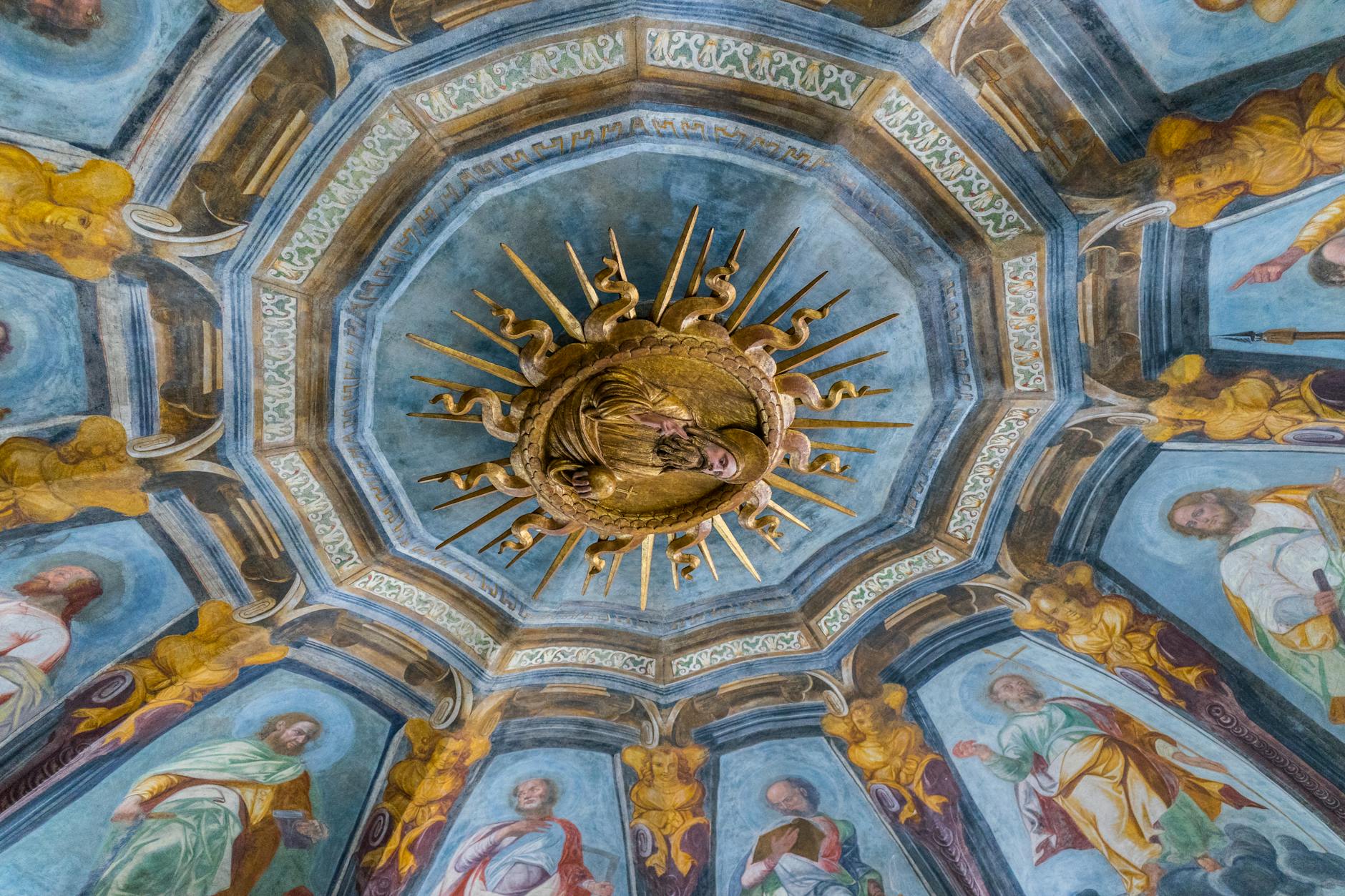
This is the one I send everyone to and the one nobody knows about. San Maurizio sits on Corso Magenta, a five-minute walk from the Last Supper, and has roughly 4,000 square metres of 16th-century frescoes covering every available surface — walls, vaults, arches, pilasters. It’s called the Sistine Chapel of Milan, which is hyperbole until you walk in and stop breathing for a second. The cycle was painted between 1503 and the 1560s, mostly by Bernardino Luini (a Leonardo disciple) and his workshop, with later additions by Simone Peterzano — who later taught Caravaggio. The church is split in half by a dividing wall: the front nave was for the public, the back was the cloistered enclosure for the Benedictine nuns. Walk around behind the dividing wall and the frescoes get even better. Completely free. Open mornings and afternoons, closed Mondays. Closest metro: Cairoli (M1).
5. Basilica di Sant’Eustorgio
Sant’Eustorgio sits at the south end of Corso di Porta Ticinese, where the Navigli neighbourhood starts. Founded in the 4th century by Bishop Eustorgius to house the relics of the Magi — yes, those Magi — the church lost them in 1164 when Frederick Barbarossa sacked Milan and shipped the bones to Cologne Cathedral. Fragments were returned in 1903 and now sit in a Roman sarcophagus in the right transept under a star-shaped bell tower (Milan’s only one with a star instead of a cross). Behind the apse, pay the 6-euro entrance and you reach the Cappella Portinari — a 1460s Renaissance jewel-box frescoed by Vincenzo Foppa between 1462 and 1468. The frescoes show the life of Saint Peter Martyr and they’re as fresh as anything in Florence. The combined ticket also covers the small archaeological museum below the church. Closest tram: Line 3 to Porta Ticinese.
6. Santa Maria presso San Satiro
Three minutes from the Duomo on Via Torino, this small parish church holds one of the most famous architectural illusions in the Renaissance. The building couldn’t have a real apse — the street behind it left no room — so in 1482 Bramante painted one. From the nave you see a deep, coffered, three-bay choir receding behind the high altar. Walk up to the rail and the entire thing flattens into a stucco-and-paint relief less than a metre deep. It still works on adults with sober expectations. It worked on me the first three times. The rest of the church is also worth ten minutes: a tiny 9th-century chapel (the San Satiro of the name) tucked off the left transept, with original Byzantine-style decoration. Free entry. Open mornings and late afternoons. Closest metro: Duomo (M1/M3).
7. San Bernardino alle Ossa
Tucked behind Piazza Santo Stefano, two blocks east of the Duomo, this is the bone chapel. The main church is a forgettable 17th-century rebuild — walk through it and take the door on the right marked Ossario. The small room behind it is lined floor to ceiling with human bones and skulls, arranged in patterns on the walls and grouped around a Baroque ceiling fresco of souls ascending to heaven. The bones came from a 13th-century hospital cemetery next door that was being cleared; the ossuary was built in 1210 and redecorated in the 18th century. It’s macabre and beautiful in equal parts and takes about ten minutes. Free, but a 1-2 euro donation is decent form. Closed Sunday afternoons. Closest metro: Duomo (M1/M3), Missori (M3). One of Milan’s hidden gems that locals send their visiting cousins to.
8. Basilica di San Simpliciano
The fourth of Ambrose’s original four basilicas — the Basilica Virginum, the one for the virgins — sits in a quiet square in the Brera quarter, two minutes from the Pinacoteca. The exterior brickwork is largely original 4th-century Roman masonry, which makes it one of the oldest standing church facades in the western world. Inside, the nave is austere Romanesque, and the apse holds a vast late-15th-century fresco of the Coronation of the Virgin by Ambrogio Bergognone, one of the best Lombard painters before Luini. The cloister behind the church is a small, leafy escape from the Brera tourist crush. Free entry. Open most of the day. Closest metro: Lanza (M2) or Montenapoleone (M3). Pair with the Pinacoteca or a coffee on Via Solferino.
9. Chiesa di San Marco
Also in Brera, three blocks east of San Simpliciano, San Marco is where Mozart performed his Requiem on the second anniversary of his patron’s death (the patron being a fellow Salzburger, not the Hapsburg you’re thinking of). The 13th-century church has a Gothic stripe across the brick facade, a tall bell tower, and a large interior that holds three notable canvases — including a Tintoretto and a Paolo Veronese in the side chapels. The acoustic is famous; the church still hosts choral concerts (check posters in the entry). The associated cloister is now part of the conservatory next door. Free entry. Worth twenty minutes. Closest metro: Lanza (M2) or Turati (M3). Combine with a walk through Brera and the Pinacoteca.
10. Chiesa di Sant’Alessandro in Zebedia
I’m choosing Sant’Alessandro over the more obvious tenth option because it does something no other church in Milan does: it pulls off full Baroque drama. Built in the 1600s by the Barnabite order, the interior is a coloured-marble explosion — pink, green, and yellow inlays under a frescoed cupola, with a 17th-century carved wooden pulpit that looks like a piece of furniture from a Habsburg palace. The Roman ruins of the prison where Saint Alexander was held are beneath the church (visible through a glass floor panel near the altar). The piazza outside, Piazza Sant’Alessandro, is one of Milan’s quietest squares — three benches, two trees, a sleeping cat. The church is free, open mornings and late afternoons, and three minutes from the Duomo. Closest metro: Missori (M3) or Duomo (M1/M3).
Best route on foot — which order to walk them
Ten churches in one day is too many. Split it across two mornings.
Morning 1 — the centre loop (3-4 hours): Start at Sant’Alessandro (9 a.m. opening), walk five minutes north to Santa Maria presso San Satiro, then ten minutes east to San Bernardino alle Ossa. Stop for coffee. Continue west to Santa Maria delle Grazie via tram 16 from Via Torino, then five-minute walk to San Maurizio al Monastero Maggiore. End with lunch on Corso Magenta.
Morning 2 — the basilicas (3-4 hours): Start at Sant’Ambrogio (metro M2). Walk south down Via San Vittore and onto Corso di Porta Ticinese — about twenty minutes through one of Milan’s better walking quarters — past the Roman columns to San Lorenzo Maggiore, then continue to Sant’Eustorgio. Lunch on the Navigli. In the afternoon, take tram 3 back to Brera for San Simpliciano and San Marco.
Total walking: about 8 km across two mornings. Take a tram when your legs say so.
Where to eat between stops
You will be hungry. Milan eats lunch between 12:30 and 2:30 p.m., dinner from 7:30 onward, and aperitivo from 6 to 8 p.m. Five places I’d send you to, all near at least one church on the list:
- Trattoria Milanese (Via Santa Marta, between San Maurizio and the Duomo) — classic cotoletta alla milanese for around 24 euros, family-run since 1933, white tablecloths, leave room for the risotto alla milanese at 18 euros.
- Luini Panzerotti (Via Santa Radegonda, two minutes from the Duomo) — Milan’s institution for fried stuffed dough pockets. A panzerotto al pomodoro is 4 euros. Eat it standing up. Cash and small notes.
- Osteria del Binari (Via Tortona, twenty-minute walk from Sant’Eustorgio) — old-school Milanese trattoria with a courtyard garden. Ossobuco with saffron risotto at 28 euros, house wine by the half-litre.
- Pasticceria Marchesi (Via Santa Maria alla Porta, two blocks from San Maurizio) — sit-down coffee bar from 1824, beautiful wood interior. Cappuccino 5 euros at the table, 2 euros at the counter.
- Spontini (multiple branches, closest one on Via Santa Radegonda near the Duomo) — thick-crust Milanese-style pizza by the slice. One slice plus a beer is 8 euros and lunch is solved.
For more food and neighbourhood context, see our Milan neighbourhoods guide.
Practical tips for visiting historic churches in Milan
Mass times. Most parish churches hold mass at 7 a.m., 9 a.m., 11 a.m., and 6 p.m. on weekdays, with extra services on Saturday evening and Sunday morning. Tourists are not asked to leave, but moving around and photographing during the service is rude. Wait twenty minutes or come back.
Photography. Allowed without flash everywhere on this list except the Portinari Chapel and during services. Tripods need permission. Phone photos are fine. Lighting boxes (the small metal boxes near important art) accept 1-2 euro coins and switch on the spots for two or three minutes — by far the best way to actually see the work.
Donations. The free churches stay free because tourists drop coins in the boxes. Two euros per church is fair if you’re spending half an hour inside.
Opening windows. 9-11:30 a.m. and 3:30-6 p.m. are the reliable ones. Almost everything closes for lunch from noon or 12:30 until 3 or 3:30. Sant’Ambrogio, San Lorenzo, and Sant’Eustorgio keep longer hours.
Wheelchair access. Sant’Ambrogio, Santa Maria delle Grazie, and San Marco are level entry. San Maurizio has a small step. San Lorenzo and Sant’Eustorgio have manageable ramps. San Bernardino alle Ossa is the trickiest — the ossuary is up two steps.
Best time to visit Milan’s churches
Mornings, always. The light coming through the apse windows at Sant’Ambrogio between 9 and 10 a.m. is the reason that altar mosaic became famous. San Maurizio’s frescoes are best between 10 and 11 a.m. when the south-facing nave windows light the back wall. Avoid Sunday morning across the board — services run continuously from 8 to noon and you’ll feel in the way.
Season-wise, the best months are April-May and September-October. July and August are hot, but the churches are stone-cool inside and make excellent breaks from 35-degree pavement. December is good for Sant’Eustorgio because of the Magi connection — local schools come through for Epiphany. If you’re caught in Milan on a rainy day, churches are the obvious answer; see our rainy-day Milan guide for more ideas.
Combine with nearby attractions
The church-hopping route pairs naturally with the rest of central Milan. Santa Maria delle Grazie is twelve minutes’ walk from Castello Sforzesco — link them with a stop at San Maurizio in between. Sant’Ambrogio is fifteen minutes from the castle by foot too, through the university quarter.
Sant’Alessandro and San Bernardino alle Ossa are walking distance from the Duomo and the Galleria — do them after the cathedral terraces in the afternoon. The Brera pair (San Simpliciano and San Marco) sit two blocks from the Pinacoteca and three from La Scala; combine all four in a half-day. Sant’Eustorgio and San Lorenzo are the gateway to the Navigli — finish the morning at one of the canal-side bars for aperitivo. For more pairings, see our broader museums guide and the running list of free things to do in Milan.
FAQ
What is the oldest church in Milan?
Basilica di San Lorenzo Maggiore is generally counted as the oldest, with its core dating to the late 4th century and Roman columns out front from the 3rd. Sant’Ambrogio runs a close second, founded by Saint Ambrose between 379 and 386. Both predate almost everything tourists queue for in Rome.
Are Milan churches free to enter?
Yes, with two exceptions on this list. Sant’Ambrogio’s main church is free; the museum and treasury cost a small fee. The Portinari Chapel inside Sant’Eustorgio is a paid attraction (about 6 euros). Everything else — including San Maurizio, San Bernardino alle Ossa, San Lorenzo, and Santa Maria delle Grazie — is walk-in free. The Last Supper is a separate, paid, timed-ticket experience.
How many churches are in Milan?
Over 400, counting parish churches, chapels, and oratories. Around fifty are of major historical or artistic interest. The ten on this list are the ones I’d prioritise on a first or second visit.
What is the dress code for Milan churches?
Shoulders and knees covered for everyone. No beachwear, no tank tops, hats off inside. Linen scarves work as quick covers. Strict enforcement is the norm at Santa Maria delle Grazie, Sant’Ambrogio, and the Duomo; lighter at smaller parishes. Don’t risk it.
Can I take photos inside Milan churches?
Without flash, in nearly all of them. The exceptions on this list are the Portinari Chapel (no photos at all) and during services everywhere. Phone photography is universally fine. Use the coin-operated lighting boxes to actually see the art before you shoot it.
Which Milan church has the best frescoes?
San Maurizio al Monastero Maggiore, without much argument. The Bernardino Luini cycle covering both halves of the church — roughly 4,000 square metres of paint — is the most complete Lombard Renaissance fresco programme that survives anywhere. The Portinari Chapel at Sant’Eustorgio is a close second for quality, smaller in scale.
Final thoughts
The mistake most visitors make in Milan is treating it like a one-monument city — Duomo, photo, done. The churches I’ve listed here are how the city actually reveals itself: a 4th-century altar mosaic, a Bramante optical trick, a wall of bones two blocks from the cathedral, an entire Sistine Chapel that nobody told you about. Spend two mornings on this list and Milan stops feeling like a stopover. It starts feeling like a place worth coming back to. Bring a scarf, small coins for the lighting boxes, and don’t queue for anything you don’t need to.